

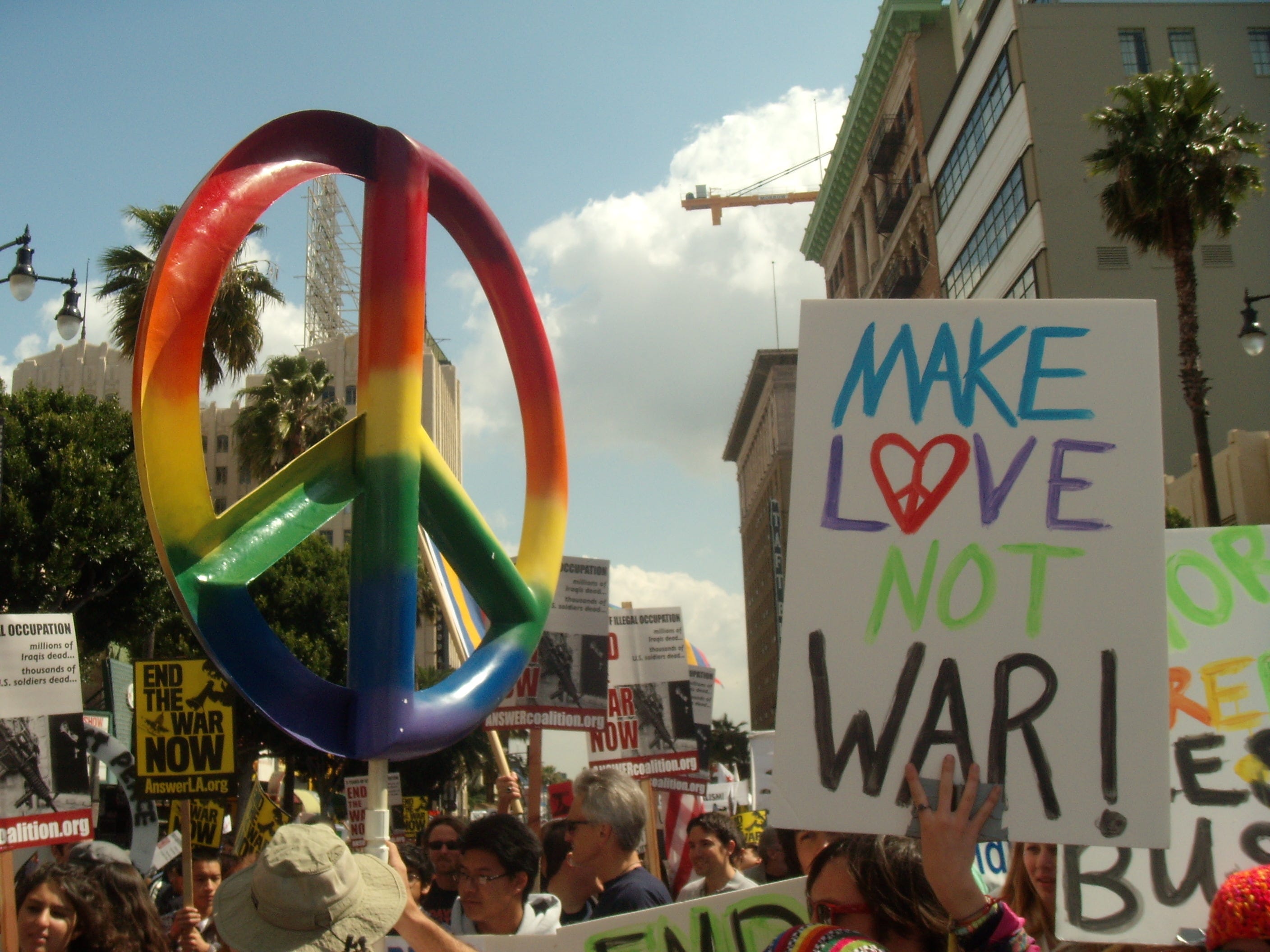
The assassination of Iran’s Supreme Ayatollah Ali Khamenei by the United States and Israel, and the prospect of war in the Middle East, felt almost like a nail in the coffin for humanitarianism and international law. It evoked a deeper question: where did all the love go?
In 2026 alone, there has been the capturing of a sovereign country’s leader in former President of Venezuela, Maduro, and now this killing. The world has been unable to respond to the might-is-right politics of the current day, exposing the dissonance between what was assumed to be the belief in democracy, peace, and sustainability.
Ironically, the United States once was the leader of democracy, development, and aid, particularly in the development of institutions such as the United Nations, World Trade Organization, and International Monetary Fund. Once champions of global development and globalism, with an increasingly integrated economy, it overnight became the strength test for the true aims of these institutions and the true validity of their strength absent the United States, both in name and financial contribution.
Suddenly, once again, the Trump administration recognizes the most untested assumption of all: that the United States will always be good and democratic, not only threatening a rewriting of the rules but a rebuilding of institutions.
As threats face the United Nations, risking closure in July if dues are not paid, “The United Nations said on Friday that it was facing imminent financial collapse and would run out of money by July if countries, namely the United States, did not pay their annual dues that amount to billions of dollars,” according to the NYTimes from a letter written by U.N. Secretary-General Antonio Guterres. There is further risk that the institution that champions and fundamentally fights for and prioritizes human rights in action and word will collapse. There will be limited space for legitimate global cooperation and solution-building.
To further the situation, President Trump established the Board of Peace, which many believe is likely to threaten the United Nations. There is a clear redefining both of the relationship and of the states that are allowed to dictate international law moving forward.
However, it is important to point out that technically this is just an open and outward expression of American domination that has existed for years. Whether it be the IMF or the United Nations, there have always been inherent embedded powers to strengthen the interests of the United States against enemies it deemed at the time, or in support of allies.
Most evidently exposed in the continuous veto of aid relief and peace plans in the years after October 7, 2023, the United States continued to side with its ally in Israel on both Democratic and Republican sides and turned a blind eye to the blatant human rights violations that were taking place.
Furthermore, they continued to refuse to acknowledge and recognize the genocide that was taking place in Gaza. Sadly, even now, their idea of peace for the people of Gaza and Palestine continues to be without the Palestinians and without actual peace in Gaza.
The Trump administration continues to replicate the idea of doublespeak, where its intentions are directly opposed to the name of the institution itself. Whether it be the Board of Peace led by a nation that continues to violate sovereign borders and do as it pleases with leaders in various states, or the claim to be “America First,” a belief of isolationism in America and removing itself from geopolitical engagements, yet continually threatening expansion and now the risk of war with the killing of Iranian top leaders — America has been far from the isolation he once promised on the election trail.
Core to this suffering and destruction, which is not new and has been known to many African countries for centuries through the various exploration and pursuits taken by the West, it is now exposed amongst Western allies in ways that once were assumed to never be tested again — especially after World War Two and the provision of interconnectedness culturally, physically, and online. But at this moment, the world seems unable to come together, unable to love, a world overcome by despair that seems to grow endlessly.
Whether it is online or in person, around the world it feels as though everyone’s reality continues to be fractured. As those realities are fractured and emotions are amplified through constant algorithmic programming that fosters hatred to garner engagement, there becomes an enemy within — some in society that need to be upended and uprooted but actually never truly can be.
Instead of encouraging a world of acceptance, the world of difference is normalized. Videos that celebrate stereotypes, that promote prejudice, and that constantly cross the line of expression and clearly migrate toward hate provide the ground for love to be an impossible reality.
It is this reality that subconsciously justifies the death of human beings and shows no remorse. Over the years, the celebration of death and the support of killings have completely ignored the human soul — the necessity to protect life and to appreciate that at present there is only the promise of one.
Whether it has been the attempted assassination of President Trump, the assassination of Charlie Kirk, or the assassination of the Supreme Ayatollah Ali Khamenei, there can never be an instance where the world celebrates the destruction of another sovereign leader or any human being for anything that they believe in.
Truth be told, people are not their ideas. People are not perfect, and people are not expendable.
This will have an effect both internally and externally. Iran will have a power struggle, as seen in other nations where their leader has been assassinated. It has already taken to responding to neighboring countries in the Middle East.
This is the moment where the world cannot remain silent and allow power to be the defining factor of the world. The world has come too far and progressed in ways that have gone underappreciated. Global cooperation, USAID, and the United Nations, though far from being perfect, meant a lot to refugees, to migrants, victims of war, and human rights organizations as they continued to chart the vision for the world. It cannot at this time choose to let those ideas die.
Furthermore, it is important that leaders make sure not to support further division, but rather promote dialogue and actively move to reinforce and honestly reflect on the assumptions they clearly overstated and undervalued.
This is the moment to show the world that love and peace can be a force for uniting people. There is actually no need to be divided if there is an actual addressing of the realities and failures that have been the systems of democracy, international law, and capitalism.
To find legitimate solutions that are equitable and actually democratic, where they do not allow for the dominance of smaller nations by larger nations — where might becomes not a concern of sovereign nations but partnership, growth, and cooperation become the norm and not the outlier.
The world once came together to fight the dominance of the Germans and built institutions that promoted the beliefs that became accustomed to so many democratic nations. It can be done again if states together choose to be champions of their beliefs both in word and action.
To truly embrace what is core to the idea of having the right to life — to have it be loving, absent the fear and threat of war, and the need for suffering to be carried by all of humanity and not just those forced to face it.
It is about time that our politics returns to having love at its center — to truly stand for a peaceful world and to ensure the safety and security of every human life, regardless of where or how it exists in the world.