

2025 has already been a year of political turmoil. Even in South Africa, it seems unable to stay out of the international instability spreading across the world. Yet, amongst the hysteria, the situation only continues to worsen.
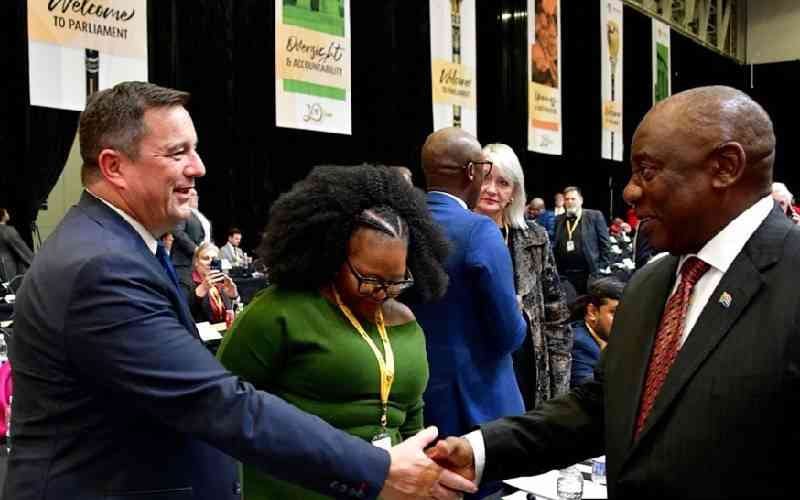
After 2024—a year that defined a new political landscape in South Africa—the optimism that brought in the Government of National Unity already seems to be waning. Constant tussles between the ANC and DA over key policies and the lack of change in the country have led to frustration.
The Bela Bill Act provides free education, enforces Grade 1 enrollment, and gives the government influence over language criteria. Accompanied by the NHI, which was meant to guarantee free healthcare for all, and the recently signed Expropriation Act, these policies have placed the ANC and DA in direct conflict with one another.
Suddenly, their constituents and policies are at loggerheads. The ANC desires to move further left, potentially to recoup some of the support it lost in the previous election. This stands in direct juxtaposition to the DA’s liberal belief system, which aims to protect and maximize capital for corporations in South Africa, leading to major infighting.
Now, South Africans, just as they were under an ANC-led government, are exposed to the same inefficiency they had before. Regardless of how radical the ANC appears in signing bills from the previous administration, the DA continues to stay. Surrounding the question of change, it seems that power and ministerial positions continue to be of significant importance to the DA.
Accompanying this is the recent news that loadshedding will return to the country—a return to the South Africa of old, prior to the GNU under the ANC. An apparent stagnation is about to grip the country.
In addition to local turmoil, South Africa has clashed with the international community, further fracturing its internal politics. Recently, Donald Trump committed to removing aid due to the new Expropriation Bill, citing the harm it poses to minorities. Additionally, aid has been frozen for 90 days.
“They’re taking away land, they’re confiscating land, and actually, they’re doing things that are perhaps far worse than that,” Trump posted on Truth Social regarding the Expropriation Act. The DA’s cries were heard far and wide. Meanwhile, the halting of HIV funding has already placed many at-risk individuals in jeopardy.
Both President Ramaphosa and Julius Malema have responded staunchly, standing by the bill and enforcing a course set for social justice and progress within South Africa.
Even Gwede Mantashe has expressed that Africa should stop providing minerals to the Western world, particularly the United States. “You passed an Exploration Act; therefore, Trump will withhold funding to South Africa. And I said, ‘Let’s mobilize Africa. Let’s withhold minerals to the U.S.,’” he stated. There is an unwillingness to back down to threats from President Trump.
However, amidst the political jockeying between these two countries and the prideful responses of their respective governments, the people remain without peace, without actual progress—while politicians take center stage.
Young South Africans continue to beg and plead for public assistance in their academic journeys and their pursuit of higher education. The same complaints that have plagued South Africa for years persist, with no solutions in sight.
As we watch politicians engage with the global community and navigate Trump 2.0, we must not forget to demand that they look inward and start addressing the problems at home. The return of loadshedding, students without access to education, and unresolved unemployment create the conditions for something far greater to unfold.