

The year comes to a close, and South Africans celebrate the festive season of December. I hope to leave one lasting message as I too hope to reflect, recover, and make sense of a year filled with drama both locally and internationally.
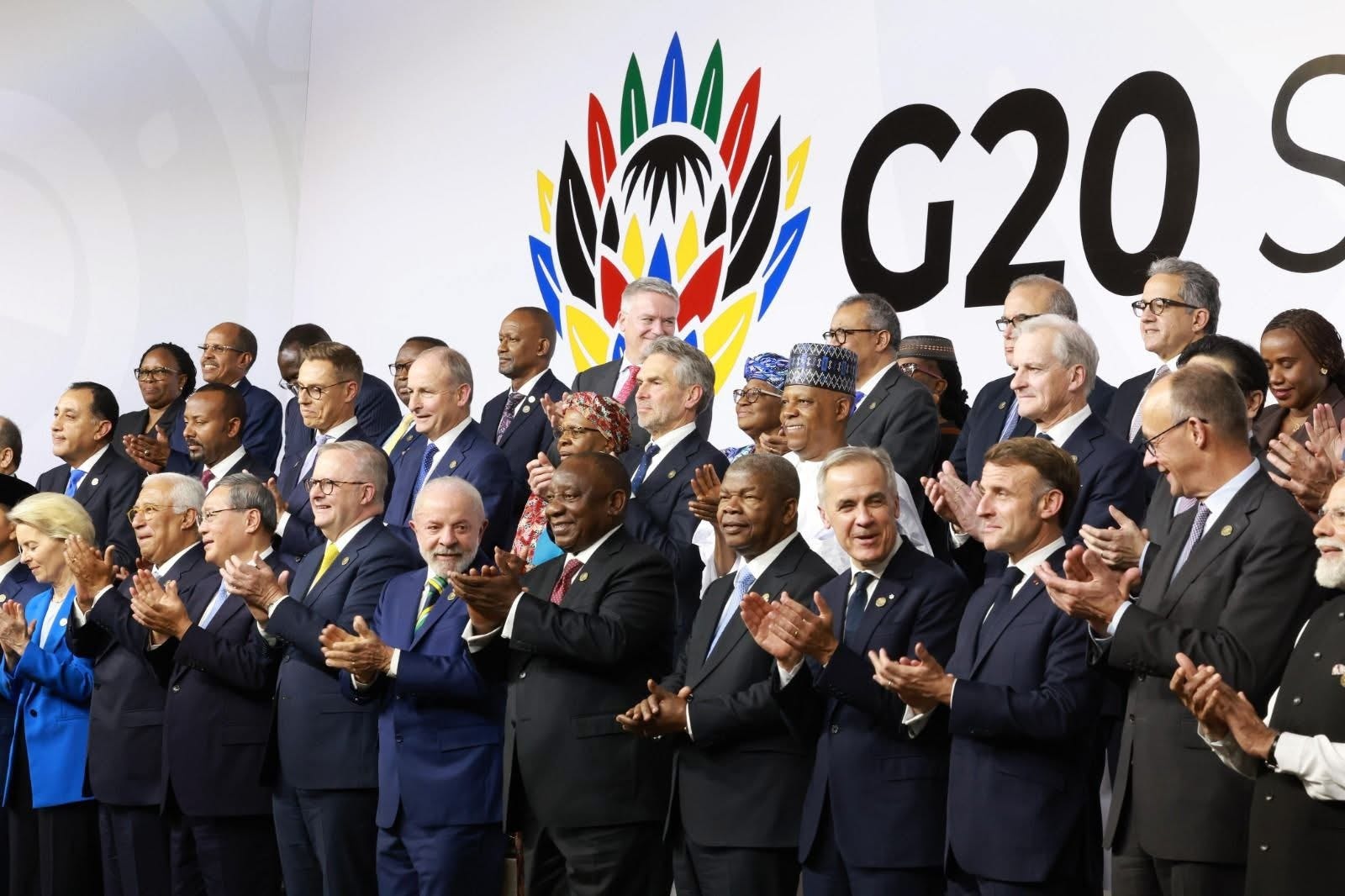
It goes without saying 2025 was intense: the return of Trump to the White House, two failed budgets, the Madlanga Commission of Enquiry, South Africa’s G20, and the ongoing battle between the White House and the government of South Africa. There was a lot happening and not a lot of time to make sense of it all.
For what felt like a flurry of political crises and battles, much remained unresolved, prolonged, and unclear in terms of a way forward. The world is truly asking: Where to from here? What next? And who will lead us out of these trying times that face us collectively?
Still currently without an answer or breakthrough, the world carries on tentatively as it holds out for the next big event, moment, or crisis that will shape the world.
Already the ceasefire in Gaza has held little of its promise as violence continues almost daily on civilians and children in Gaza. South Africa is faced with the unfortunate events that led to young men being on the frontlines of Russia and Ukraine. The world asks whether the G20 will hold as the United States takes the summit to Miami as they take the presidency from South Africa.
It would be hard not to acknowledge the hopelessness and apathy that face the world as things improve, but at a pace far too slow to address the problems confronting us. But that does not mean there is no hope at all.
The small victories—the recognition of Palestine as a state, historical allies of the United States defending South Africa from the exclusion of the G20 next year, and committed calls for peace to be found between Russia and Ukraine—are progress.
Furthermore, locally, though it has not been great, attempts by the government to govern have been seen and made. Hosting the G20 led to the refurbishment of Johannesburg. Though incremental—street lights, potholes, and traffic lights—it was a sign that good governance is possible when there is concentrated effort by the government.
Additionally, the declaring of Gender-Based Violence and Femicide as a national crisis, though long overdue, was a step in the right direction. Of course, it requires adequate planning and implementation by the government and civil society to truly make progress, but recognition is a step closer to the change we hope to see in South Africa.
So it is never too bad or too good; it is always somewhere in between. The hope is to eradicate suffering from the world, but the reality is sometimes far from that. Still, it is the small changes that lead to actual change. It will be, and forever will be, a continuous battle without a finish date in sight—but one that, when change does happen, can be good for all if we think about things in the right manner.
Thinking in the right manner is not only thinking but listening to those who are not being heard—those who are not given the privilege and platform to represent themselves and their issues. But most importantly, it is to represent each other and to start thinking not only for the individual but with the collective.
If there were more time to hear one another, to see one another, and to truly recognise the pain and suffering that everyone has felt collectively, then maybe we would take a step in the right direction.
Reminding ourselves that sometimes it is more important to make someone’s presence and existence seen and appreciated, instead of excluded or ignored due to differing ideologies. To have the willingness to see humanity before the ideas of the person. To truly remember that a person is not their ideas, and everyone—regardless of who they are or how they might present—is deserving of love.
In a world where algorithms skew our views of the world, reward us through engraving hate more deeply into the human fabric, and eradicate our ability to appreciate and listen to nuance and context, we have to simply find a better way to preserve our humanity and premise our existence on love and not on hate.
There will be thousands of discussions throughout the holidays, many of them political. Let these be conversations that spark growth, innovation, and respect for our shared democracy. Let it not be a place for hate, othering, and exclusion. This is our collective country, and it will be our collective future—so it is both ours to protect but also ours to break if we do not find a better way that speaks to all of us.
This year has exposed how easy it is to declare someone the enemy, to lose relationships over politics, and to be forced into the world of dichotomies. The reality is that there is far more to us and to life than politics. There are connections that span much longer than the terms presidents have, and there are friendships that run far deeper than political ideology. It is important we learn to disagree healthily with one another, appreciating what it truly means to agree to disagree, to preserve the human value of community.
The world has lost sight that this thing we call politics is about people. Its failure affects people’s lives, their beliefs in tomorrow, and their ability to dream for the future. It is not just ideas; it’s decisions that define the reality of so many lives. It cannot be about the individual—it has to be about the collective.
I hope for there to be a way where peace, love, and positivity are the foundation for our political interactions, our application in designing policy, and our core principle when there is suffering anywhere in the world. But more importantly, for it to be an ideal shared amongst us all regardless of how different or similar our stories are. In learning to appreciate each other, we learn to appreciate the differences through listening openly, not only with our ears but with our hearts.
2025 showed me the world needs more love, more light, and more care. It only happens once we are willing to listen, to seek commonality, and to appreciate differences. Politics should not be used as a force to break the world, but rather to build and make it anew.