

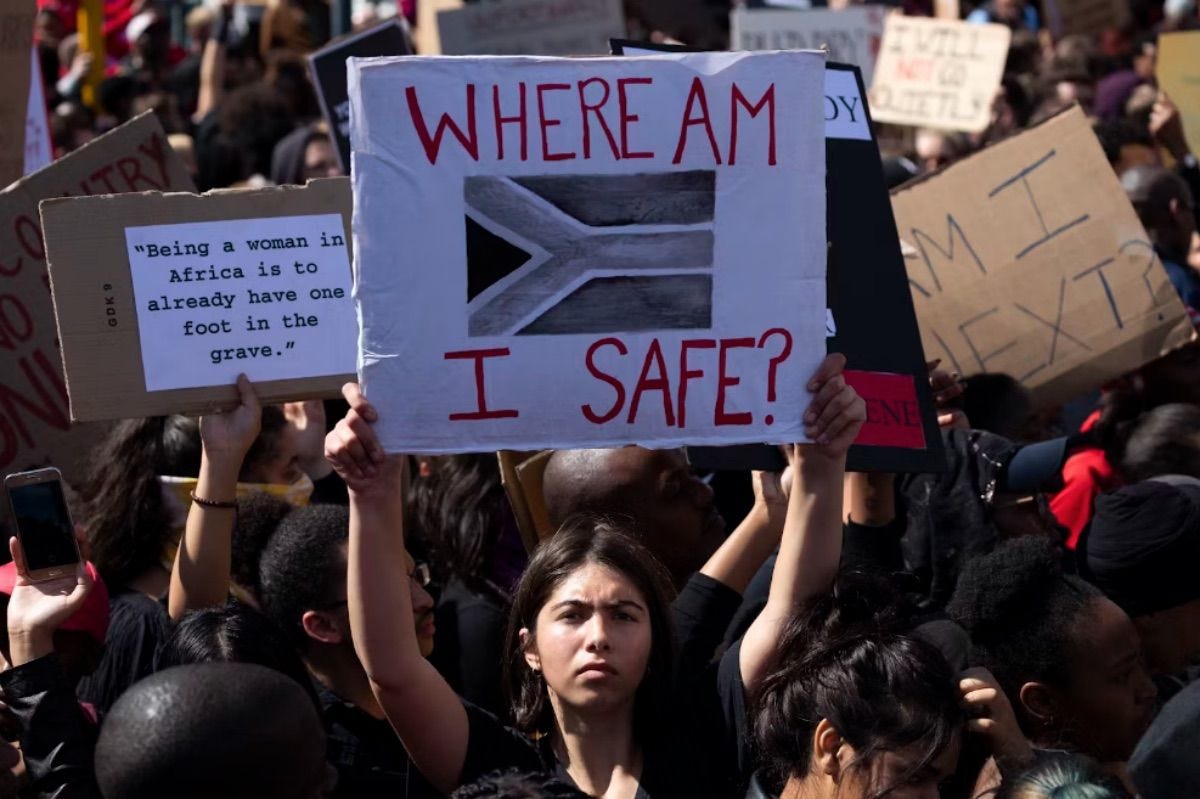
Over the past few days, purple has taken over South Africa’s social media feeds. The online movement, led by the Women For Change organisation, known as the G20 Women’s Shutdown, has urged women across South Africa to turn their profile pictures purple, wear black on the 21st of November and to refrain from attending work and spending money in protest of the country’s on-going femicide crisis. This movement has spread rapidly online, creating a sense of unity, urgency, and hope. But it also raises important and difficult questions.
In 2025, South Africa continues to experience a severe and alarming crisis of gender-based violence (GBV), often referred to as the “rape capital of the world.” It has been declared as a national crisis – something women have to live with daily, in their homes, on university campuses, at church, and in their relationships. So when a campaign calls on women to take a stand – to pause their daily lives in protest – it raises the question: why does the responsibility to fight a system that harms women so deeply still fall primarily on women themselves?
There is no doubt that solidarity is powerful, and that women standing together sends a message that cannot be ignored. But should the fight against GBV not also include men, families, communities, and institutions? Shouldn’t the fight be shared equally and urgently across society?
Why is it always women’s responsibility to fix a system that fails them?
Men and boys are beneficiaries of a patriarchal system that protects them, excuses them and fails to teach them empathy, consent and accountability. They are not taught to love without dominance, to treat women as human beings deserving of respect and safety. Until this changes – in homes, in schools, in workspaces, and in communities – we will keep marching in circles, keep reposting another tragic loss, and keep changing our profile pictures, while nothing changes where it truly matters – in implementation.
Social media has been a driving force for modern activism. We saw it during the #BlackLivesMatter, #FeesMuustFall and #AmINext movements. It matters. It’s important. It spreads awareness, creates community, and provides a stage for discourses about pertinent issues. But awareness without action becomes unproductive.
We are already aware. We have been aware. This is not a new issue. There has been an on-going violence against women and girls for years.
What happens when awareness has already been achieved? When everyone already knows the crisis is real, but the system remains unchanged?
Perhaps the question isn’t whether the purple profile pictures matter – they do, symbolically. Instead, it’s whether awareness alone can translate into tangible, on-the-ground change in our justice system, in our schools, and in our homes. It’s whether the lived realities of women and girls change.
What we need now are structural shifts – legal, educational and cultural. Purple profile pictures won’t stop a legal system that allows convicted rapists out on bail. They won’t reform universities and schools that let perpetrators continue their studies while survivors are left to pick up the pieces. They won’t fix police stations where women reporting assault are met with disbelief and laughter.
Awareness campaigns may trend for a couple of days, but justice cannot live in the algorithm.
As powerful as this campaign is, there are some layers of complexity to it. Another question it raises is about accessibility. The #WomensShutdown encourages women to not partake in paid or unpaid labour – a powerful statement in theory. But, what about those who can’t afford to do so? What about women who might lose their jobs, miss exams, or face penalties for their absence? In a country overburdened with high unemployment and inequality, many women cannot afford to take the day off.
Can activism that requires sacrifice be effective if it’s not equally accessible to everyone it hopes to represent?
Perhaps what the campaign truly highlights is not division, but shared desire for action and effective change – from awareness to accountability. Maybe this movement is a reminder that our frustration, grief, and exhaustion are valid, but that we also need to keep asking: what’s next?
How do we create long-term change in how boys are raised, in how empathy is taught, in how consent is understood? How do we hold our institutions accountable – schools, universities, workplaces, courts – for the protection and justice they owe to women?
We need to tackle the problem at the root. We need programs that target men and boys, that teach empathy, respect, and consent. We need psychological support structures for both boys and girls that address the cycles of trauma and violence. We need schools and universities that uphold zero tolerance towards sexual violence. We need a justice system that prioritises survivors instead of protecting perpetrators.
The G20 Women’s Shutdown has definitely struck a chord, reaching both nationally and globally. Whether one chooses to participate or not, the questions it brings to the surface are crucial. Because perhaps the real power of movements like this lies not only in what we do on one day – but in what conversations, questions, and collective actions follow after it.
Awareness is not enough anymore. We need action. We need accountability. We need real change – and it can’t just come from women.

You hit the nail on the head by identifying that the purple motif online can be a form of virtue signaling and the economic withdrawal can negative consequences esp for those in dire situations. The campaign is a well intentioned form of mobilisation for international appeal (both online and for the G20) and national action (expediting the NSP and National Disaster status) yet in its marketing underdeveloped.
There's too much focus on symbolism (purple profiles and black clothes) and not enough on systemic dismantling of patriarchy that enables violence and apathy toward women and the gender minority. Sonke Gender Justice is doing great work on addressing this with young men, but this movement feels bound to be short-lived if it's mostly about solidaritye bcs the severity of the situation requires more than that but people don't seem ready to go beyond that awareness threshold.
In short no. Infact, it all becomes performance if the confrontation and dismantling of systems that perpetuate violence is not prioritized.