

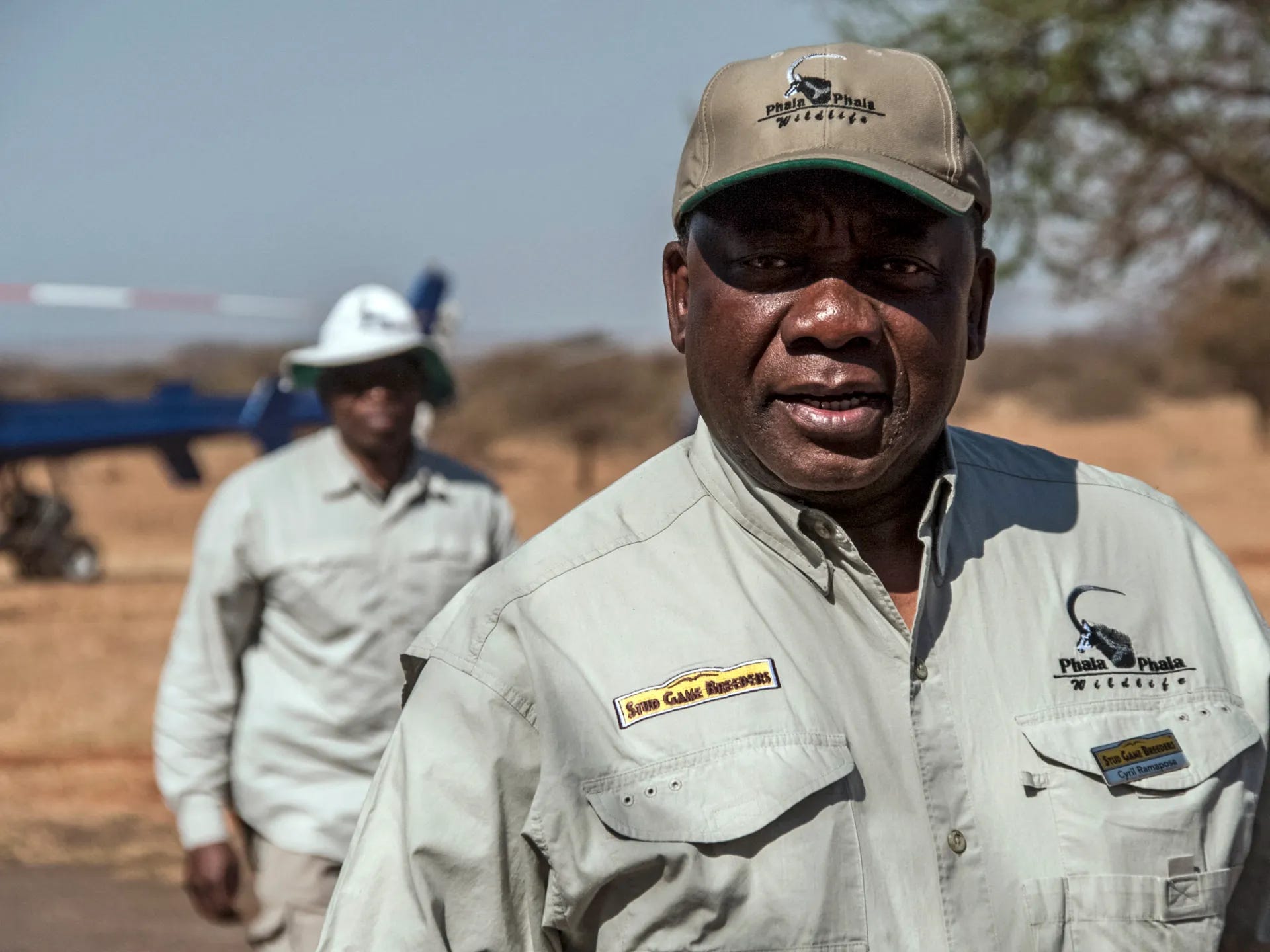
Another South Africa history is made. The Constitutional Court finally gave its ruling and ruled that Parliament’s Phala Phala vote was invalid and unconstitutional, leaving the President open to an impeachment committee and many decisions for him, his party, and the country.
The ruling brought forth by the Constitutional Court came about from a case raised by the Economic Freedom Fighters in 2024. A party who just recently dealt with the rules of law themselves with the sentencing of their own leader took to the streets to celebrate this key victory and major blow to President Cyril Ramaphosa. Having dealt with the Phala Phala incident since 2022, this opens the need for there to be an impeachment committee to hear the evidence and report.
Key to the framing is that this year marks an election year. President Ramaphosa remains one of the most popular politicians in the country and is likely to have a positive effect on the ANC’s overall image. It is unclear as to whether or not this ruling will impact that, considering many South Africans looked past it for much of his presidency and the DA continued to make it a non-issue with the formation of the Government of National Unity. There is still much to be gained at the polls.
Furthermore, the option presents itself of Deputy President Paul Mashatile taking the ANC into a local government election, though likely to swell some ground forces. He is unlikely to be dealt with by the usual media that discredit many of his allies, his own lifestyle, and his means of governance. More to that, he remains a relatively unknown person to the nation as a whole, a character who has been shadowed by President Ramaphosa’s approach to governance. There is much to be thought about for the ANC.
Taking a more insular look, directly engaging with policy, it will be hard for the party to ignore the step-aside rule. Already, Julius Malema, as a former ANC member, but also someone who has to make the most of time as he appeals his sentence, has begun to openly question if they will enforce the step-aside rule or whether it only applies to certain individuals. There will be close scrutiny of policy.
This rule gave exit to former police minister Senzo Mchunu, it has led to the suspension of former Deputy Police Commissioner Shadrack Sibiya, and currently faces the fate of the President. Will he decide to follow protocol, or could there be a larger force at play that may trump the interests of the party and, in some ways, aid the party?
More interestingly, the politics of the ANC, which have become known to everyone, will be at play as the election year sits nearly a year and a half away. Claiming power and hold of the party early may allow some to prescribe their fate for the future with a bit more certainty and have, beyond just their own machinery, the party machinery at their disposal. It will be interesting to see if they will be loyal to a president who was already on his way out or choose themselves. But much is to be made of the ANC.
Uniquely, this is not like prior ANC presidencies. Though the party does have say, it does not mean they have the means to overrule coalition parties. By no means could there be certainty about where President Ramaphosa’s loyalties lie, whether with his party or the nation. But the politics of the ANC are the politics of everyone.
Already, the Democratic Alliance has said it intends to uphold the rule of law. Under the new leadership of Federal leader Geordin Hill-Lewis, it represents an interesting moment for his party. Beyond making a decision that is good for the party, it is bound to have an impact on the nation as a whole.
If the exit of Ramaphosa goes horribly and the person who follows does away with the little progress he has made and the small turns in the economy — which are little and beyond the need for celebration, but still a turning point in our troubled past — the parties to blame will be the ones at present. More importantly, the government to blame will not be an ANC government but a multiparty coalition government. The decisions made now, beyond defining the future for the party, will etch much of the legacy of the DA as a party for South Africa.
Furthermore, the reality that faces the DA without President Ramaphosa at the forefront is not one where the ANC is welcoming, but rather one rooted in hostility. At the base, the South African Communist Party is independently contesting the local government elections, as they refused to uphold any partnership with the DA. It is known that senior members of the ANC such as Gwede Mantashe and Paul Mashatile have strong ties to the party. Their partnership will not have the protection and support of the man at the front.
But beyond that, the instance where the government is led by the progressive parties of South Africa in partnership with the ANC, where their criteria for entering government was without the ANC and without President Ramaphosa, would represent a major failure for the DA if they did not stop the “doomsday coalition” they’ve spent hours campaigning against. But it may also be recognised that maybe the DA is bound for opposition politics rather than governance.
Where political parties celebrate this moment, it truthfully represents a gateway to more instability in politics as a whole. Johannesburg suffered immensely as mayors were accused of corruption, voted out in motions of no confidence, and replaced continuously. The future seems more uncertain than ever before in South Africa, and this is truthfully what this moment represents.
This is only the start of a very unclear process where the President still ought to decide if he will even be a part of an impeachment process to begin with or rather resign. It is a moment where he has to ask himself: has he done his part, and is he ready to allow South Africa to deal with whatever is next? To not be a conductor, but a participant — a citizen.
He was thought to have considered resignation the first time the Phala incident came to light in 2022, but remained on after close allies convinced him to stay. But now he is no longer politically young, there is no second term to hold on to, and in actuality South Africa seems more unsolvable than ever from a political standpoint. So maybe he will do what is right and let the country resolve its fires on its own.
The future is uncertain, but it is not uncertain just yet. The ruling is only the first step in the process. The rumours, first thoughts, and opinions will land. South Africa will be unchanged tomorrow.
This case does ask deep questions about our beliefs regarding justice and accountability. Whether they are truthful, or just words that have become synonymous with the ideals of South Africa but far from the reality that presents itself. Rather, does it ask of this country to only uphold those ideals when all other means to avoid them have failed? To be impeached or not to be impeached — that is the interesting question facing the President of the country.
What I found most telling about the people around him came from someone close to him on 702 during Clement Manyathela’s show. Frans Baleni said, “He must do the right thing, it is painful. Sometimes people may appreciate you when you are not there.” There is an air of resolve that seems to be present and perhaps a little under-appreciation for the President as a whole.
Taking over a country after State Capture in South Africa, being faced with a global pandemic, the 2021 South African unrest, interactions with the United States, and the forever-changing world of geopolitics guided by the actions of the United States and the Trump administration, the President has done some good. It was probably much worse at the time the events occurred and could have been much worse for the country as a whole.
This moment is going to be remembered as a moment in the country where either the joy of politicians will be seen as overzealous under-appreciation of the calm that has been brought amongst the political chaos, or rather a catalyst for something much darker and more sinister than before.
It was nearly two decades ago that they celebrated the defeat of President Thabo Mbeki and the electoral confidence that followed. It was meant to be a moment of renewal, but it became something much worse. Technocrats may not be the most entertaining, but they are most definitely appreciated long after they are gone. What will be the fate of President Ramaphosa? That will be for the impeachment committee to decide as he and his allies ask what the true worth of just a little more time in office really is.