

Politics in South Africa once centered on a dedication to the people of South Africa as they continued to struggle against unequal systems that furthered inequality and limited opportunities for people of color. Thirty years later, politics seems to be the only means of obtaining an opportunity and receiving a stable salary. This shift has led to the degradation of politics in South Africa, especially within the ANC.
It is important to understand the considerations 50 to 70 years ago when people were actively choosing to fight against an oppressive government. They chose their principles and shared belief in a unified South Africa rather than accepting the system as it was. Many of these individuals came from what is considered the middle class, with preachers, lawyers, and doctors coming together to aid in the liberation of South Africa. Uniquely, the majority of individuals who were orchestrating the struggle against apartheid were highly educated and used their education to draft policy, fight legal cases, and aid in the dismantling of the apartheid government and system. However, post-1994, this left the ANC in a very tricky place.
After the election of Thabo Mbeki as president, there was a growing sense that politics had moved away from the people's concerns and focused primarily on policy. With the introduction of BEE in 2003, there was a belief that economic prosperity would rain on the black community. However, BEE created an elite circle of individuals who were given a multitude of opportunities to grow their wealth instead of the wealth falling into the hands of people of color. Even though this was the last time we had a distinguishable middle class, South Africans and supporters of the ANC wanted access to opportunity and capital now. Additionally, accompanied by the mismanagement of the HIV/AIDS epidemic, there was a growing need to open the floodgates to the government, which controls trillions of rands a year. The ANC and South Africa felt that this would be best done by Jacob Zuma, a man who could gather the masses and had overwhelming support from the Zulu people. He was the only choice, but this decision changed politics in South Africa.
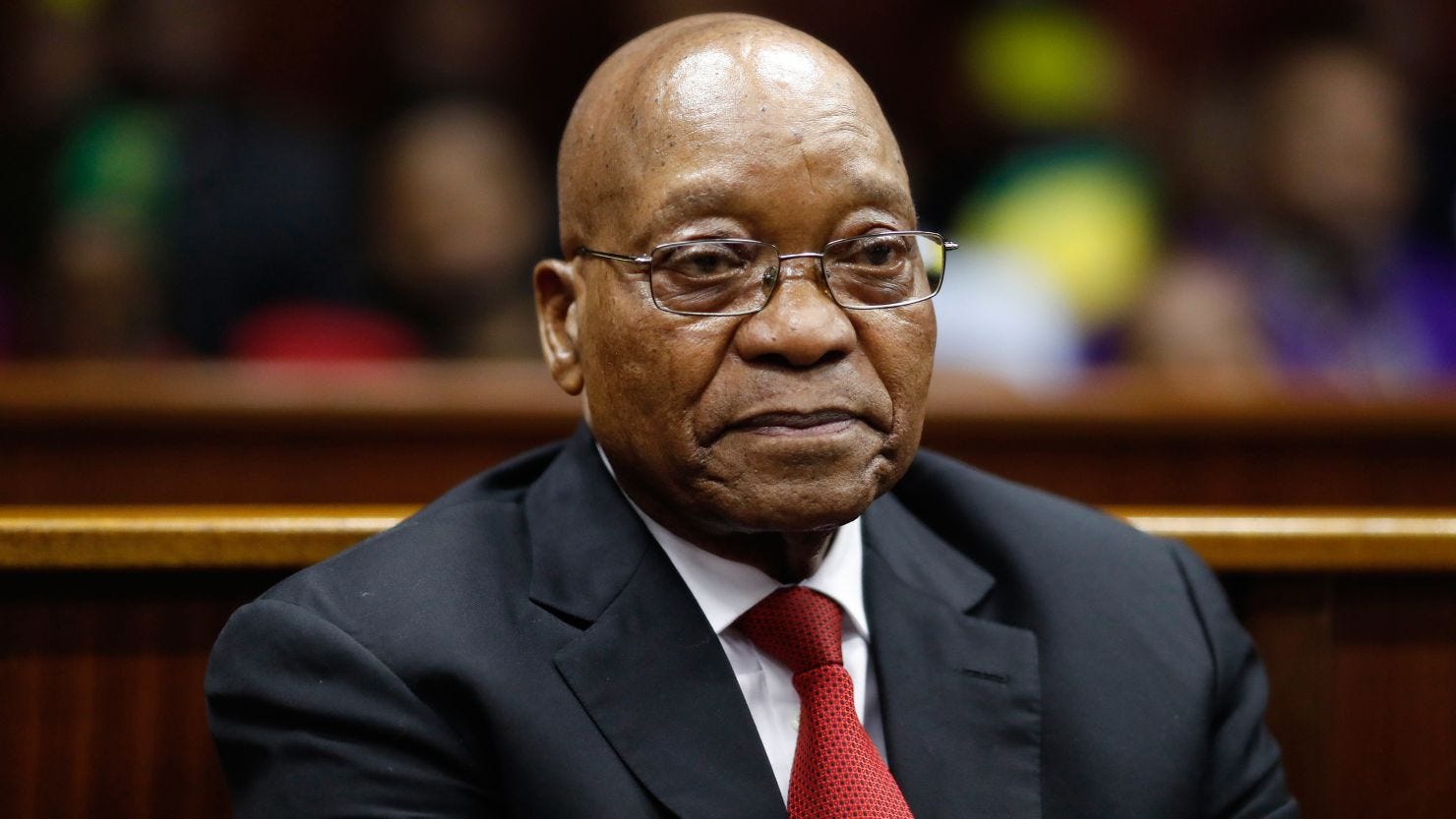
Jacob Zuma, by no means, is considered unintelligent. He set up a governing system on Robben Island and played very influential roles in the ANC during the fight for liberation. He never lacked intelligence according to his CV. However, on paper, he received no formal schooling. For some, this raised concerns along with his reams of corruption cases and other legal findings. Zuma recognized that the best way to extract money from the government was by controlling who could be appointed, as those who allied with him were more likely to look the other way. However, there was never consideration about the qualifications of the individuals and their capacity to fill the post. This meant that anyone from anywhere could access the government and be on the government payroll, even if they had no qualifications. This later became known as cadre deployment, where the president can appoint ministers in the cabinet as he sees fit. For those who remember the Zuma years, there were 12 cabinet shuffles.
Zuma's tenure made us question whether we should be placing standards on politics and whether there should be a barrier to entry. The risk is becoming more elitist and excluding people from participating politically. But at the point at which we are, is the solution to fix politics, or is the solution to fix the country so that people do not choose politics as a legitimate career?
Most governments around the world have people choose politics at the back end of their careers, but it is never something that they pursue as a career unless they want to be directly involved in policy-making. Thus, uniquely, you get a good rotation of people in the political system, but you also, in some instances, change between governments more regularly. This is mainly due to the fact that there is a level of elitism embedded in politics already. If we look to the UK, most of the prime ministers have been to Oxford, and in America, it tends to be the elite who engage in politics. Here, we need to remember that most of the time these people are moving away from large incomes for smaller incomes to help their party pass policy in government. None of them have an inability to live a life outside of politics.
In comparison to South Africa, many politicians only have politics as an option. They lack the education due to systemic failure and lack of government investment in education that is accessible and usable to all. Politics remains the only avenue that people of color can access without being excluded due to government failure. No corporation would consider hiring anyone without a degree, and even worse, many politicians lack matric certificates. So, because of the low barriers to entry, politics continues to remain an option for everyone. An option which does not come with much ease.
We must not be quick to forget that MPs are still expected to attend all the various parliament sittings and party meetings. They are forced to care about the concerns of people when, in reality, all they seem to be concerned about is staying financially afloat. What this has led to is disinterested politicians and corrupt politicians because this is the only place where they will see such large sums of money pass their desk.
However, if we proposed a South Africa where, regardless of race, gender, or creed, you were provided an education and there were opportunities for people of all socio-economic classes, it is likely that we would drain off the disinterested politicians. They would have the means to make larger sums of money in other industries. It is important to continue to place pressure on the private sector to aid in upskilling communities if they are to benefit from being in South Africa because then people, with the right infrastructure that is functional, are likely to find a means of independently creating their own economic success.
Politics is about providing service to people and ensuring that people are given the dignity and respect they deserve. The reward should be in seeing a prosperous and diverse South Africa where people are able to access their own land and company through assisted measures proposed by the government to invest in SMMEs but also newfound independence through upskilling the population as a whole.
Nelson Mandela stood down after just four years so he could pass the baton onto the next generation. As the youth, we sit waiting for our opportunity to access government and policy; however, we are continually denied opportunity because of the lack of opportunities outside of politics. By no means do I justify this as a means to engage in corruption, but it provides a framework for why corruption has plagued our system.
South Africa is positioned in a unique place where we are able to quickly identify the problem but are unable to provide a solution. Here, I say the solution is to get back to running South Africa where people have confidence in the economy, where we can cohabit and coexist in areas, and where education is being provided to all in need.
Ultimately, politics was never meant to be something that you decided you were meant to do. Politics chooses people and provides leaders who care for the greater well-being of South Africa. So, should politics be a career and passion project?