

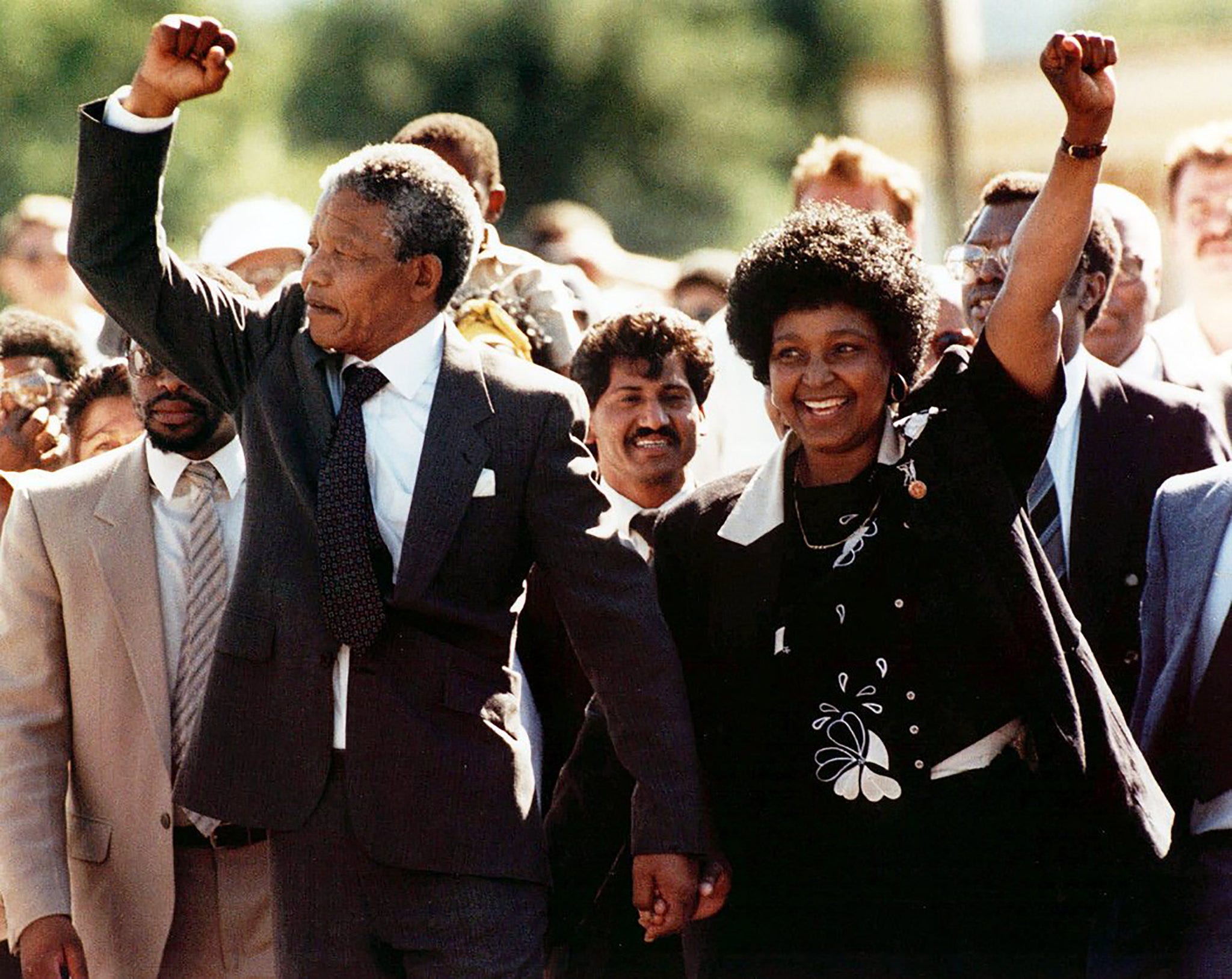
Reading Nelson Mandela’s Long Walk to Freedom reminded me that the South African story and belief in a better future did not end with liberation but began with liberation. It was not meant to be a moment that defined our history, but a moment that moved us collectively forward—a moment that asked us all to be active participants in the future of this country. Not through the government solely, but with the people included within that.
It has become evidently apparent that South Africans have become heavily reliant on the government, whether it be the provision of basic services, the need for justice, or simply an improvement in life. It has left many South Africans waiting for the “messiah,” the next Mandela, who will change the tide against a system that has been far from perfect. However, even Mandela himself recognised the impossibility of this aspiration.
During the campaign trail in the build-up to the 1994 elections, the first democratic elections of South Africa, he challenged South Africans. “If you want to continue living in poverty without clothes and food then go and drink in the shebeens. But if you want better things, you must work hard. We cannot do it all for you; you must do it yourselves,” he said. He outlined that it is not the government alone that can improve conditions and change the country, but rather everyone’s active willingness to be a participant in improving the future of the country.
What became evidently clear was that South Africans as a whole need to decide what their future holds. Riddled with failure and corruption that is forever lamented in the media, it seems as though there is an unwillingness to perceive solutions to our problems. The country’s sentiment has grown to one where negativity is enough, where simply exclaiming how bad the country is will move us forward to the country that we hope to see.
South Africa has not been a leaderless country, but it has become visionless. There has been no clear outline for the aspirations of the people and how we actively achieve them. The same embattled fights have been taken up through activism which has no end, achieves no policy changes, and leaves the country exactly where it was years prior. Whether it be crippling unemployment, gender-based violence, or a stagnant economy, the problems have been apparent for years.
It has become a lot easier to assign the blame to a few bad apples rather than engage with the nuances present and find feasible, working solutions.
Politics and journalism have become that of commentary and rhetoric, where there is no need to show how journalists and politicians aim to achieve their goals or guide the country to a place where revolutionary solutions will be beneficial for everyone. It has rather become about assigning blame and distancing themselves from the solution.
It is evident when people in the country speak of the need for economic growth. However, they lack the structural understanding and technical ability to actively explain how that growth will be achieved. It is a country where promises mean significantly more than results.
There is no denying the government has been front and centre in failing to provide those promises. Their own inefficiencies and self-interested approach have meant many have lost faith in institutions, thus losing faith in democracy. But it has also been ourselves, citizens, who have continued to allow it to happen.
The reality is that they were the only ones who provided some faith that there was vision and a future to believe in. Yet, we failed to hold them accountable to it. It was us who allowed a government to return after another election cycle to disappoint us once again, as they had in their previous turn in office. It was us who allowed ourselves to let people lose sight of the strength and value that can be found in democracy.
It has been all of us—collectively, citizens, business, and the government—who have allowed failure to be the norm and not an outlier. The government derives its power from the people, gains its legitimacy through the ballot, and receives its funding from those who operate in the economic environment and climate that allows them to donate millions of rands a year to campaign to the people. It is us who have been to blame for the failure of this country, and it can be us who work towards a solution.
Instead of being plagued by pessimism that claims it will never work, we must become the people who find ways to make it work. To be the people in community spaces who put their hands forward to be leaders in their communities, to provide a vision for what the future holds, rather than being commentators and detractors who further diminish our pride.
The South African story has been a great one, but it is now waning and needs a new narrative that is created by the people of South Africa—inclusive of people from all races, all economic classes, and from urban and rural communities. To find a way forward that does not only happen at the hand of the government, but rather starts with the people.
It is the small things: organising community meals, community centres for recreation and sports, and creating literacy classes to help those who have not had the same privilege as the most well-off South Africans. It goes beyond telling people that they should vote, by engaging in political classes explaining what we need to vote for to see the South Africa we dream of.
Sometimes it is even smaller than that and simply starts with talking to one another in South Africa and understanding the extent of each other’s hardships. As South Africa belongs to all who live in it, it extends to dealing with the hardships of foreign individuals and finding solutions to their problems, whether it be here in South Africa or their native land. It means being willing to do things together as a community rather than as individuals or isolated communities defined by race, religion, class, creed, colour, or nationality.
There is no telling what the future holds in South Africa if we are unwilling to listen to one another. There will never be a feeling that suffering anywhere is suffering for all in this country and abroad.
South Africa has been a country that prided itself on its ability to speak to humanity, to call out injustice in the world, and to take decisive action when necessary. It is about time that it happens here at home, with everyone.
This country is nothing without its people. It cannot be and will not be this beautiful place called South Africa if it does not derive its identity from the soul of each and every South African. If it lacked the cultural diversity that teaches us to appreciate and understand each other.
The ideas that once stemmed from democracy—being the rainbow nation, truth and reconciliation, and a unified country where every person was seen as equal—were not flawed ideas, but ideas that became too easy to recite without there ever being an actual understanding of what that truly meant for all South Africans.
What the future holds is not a turning back on all of the ideals that came before, that allowed people to be represented in government, but a reteaching and relearning of how these things have mechanisms that can lead to change.
Absent our understanding of what they meant or how they failed us will allow the country to lose sight of what it was meant to be, or what it should be when it is said that we are South Africa.
The need for a national identity that binds everyone from Soweto to Sandton, from Cape Town to Khayelitsha, and Umlazi to Durban means we will otherwise continue to become a country that is separated by class, access to opportunities and education, and access to basic healthcare, instead of a country working to resolve those separations.
As Nelson Mandela puts it in his book, the start of South Africa’s journey was the start of freedom and the need for there to be more freedoms—freedom from poverty, crime, gender-based violence, unemployment, lack of healthcare, lack of education, and lack of economic participation. For it is this fight for freedom that we need to start in South Africa, and not harp on the endless joy our history once gave us.
Reading Nelson Mandela’s Long Walk to Freedom reminded me that the South African story and belief in a better future did not end with liberation but began with liberation. It was not meant to be a moment that defined our history, but a moment that moved us collectively forward—a moment that asked us all to be active participants in the future of this country. Not through the government solely, but with the people included within that.
It has become evidently apparent that South Africans have become heavily reliant on the government, whether it be the provision of basic services, the need for justice, or simply an improvement in life. It has left many South Africans waiting for the “messiah,” the next Mandela, who will change the tide against a system that has been far from perfect. However, even Mandela himself recognised the impossibility of this aspiration.
During the campaign trail in the build-up to the 1994 elections, the first democratic elections of South Africa, he challenged South Africans. “If you want to continue living in poverty without clothes and food then go and drink in the shebeens. But if you want better things, you must work hard. We cannot do it all for you; you must do it yourselves,” he said. He outlined that it is not the government alone that can improve conditions and change the country, but rather everyone’s active willingness to be a participant in improving the future of the country.
What became evidently clear was that South Africans as a whole need to decide what their future holds. Riddled with failure and corruption that is forever lamented in the media, it seems as though there is an unwillingness to perceive solutions to our problems. The country’s sentiment has grown to one where negativity is enough, where simply exclaiming how bad the country is will move us forward to the country that we hope to see.
South Africa has not been a leaderless country, but it has become visionless. There has been no clear outline for the aspirations of the people and how we actively achieve them. The same embattled fights have been taken up through activism which has no end, achieves no policy changes, and leaves the country exactly where it was years prior. Whether it be crippling unemployment, gender-based violence, or a stagnant economy, the problems have been apparent for years.
It has become a lot easier to assign the blame to a few bad apples rather than engage with the nuances present and find feasible, working solutions.
Politics and journalism have become that of commentary and rhetoric, where there is no need to show how journalists and politicians aim to achieve their goals or guide the country to a place where revolutionary solutions will be beneficial for everyone. It has rather become about assigning blame and distancing themselves from the solution.
It is evident when people in the country speak of the need for economic growth. However, they lack the structural understanding and technical ability to actively explain how that growth will be achieved. It is a country where promises mean significantly more than results.
There is no denying the government has been front and centre in failing to provide those promises. Their own inefficiencies and self-interested approach have meant many have lost faith in institutions, thus losing faith in democracy. But it has also been ourselves, citizens, who have continued to allow it to happen.
The reality is that they were the only ones who provided some faith that there was vision and a future to believe in. Yet, we failed to hold them accountable to it. It was us who allowed a government to return after another election cycle to disappoint us once again, as they had in their previous turn in office. It was us who allowed ourselves to let people lose sight of the strength and value that can be found in democracy.
It has been all of us—collectively, citizens, business, and the government—who have allowed failure to be the norm and not an outlier. The government derives its power from the people, gains its legitimacy through the ballot, and receives its funding from those who operate in the economic environment and climate that allows them to donate millions of rands a year to campaign to the people. It is us who have been to blame for the failure of this country, and it can be us who work towards a solution.
Instead of being plagued by pessimism that claims it will never work, we must become the people who find ways to make it work. To be the people in community spaces who put their hands forward to be leaders in their communities, to provide a vision for what the future holds, rather than being commentators and detractors who further diminish our pride.
The South African story has been a great one, but it is now waning and needs a new narrative that is created by the people of South Africa—inclusive of people from all races, all economic classes, and from urban and rural communities. To find a way forward that does not only happen at the hand of the government, but rather starts with the people.
It is the small things: organising community meals, community centres for recreation and sports, and creating literacy classes to help those who have not had the same privilege as the most well-off South Africans. It goes beyond telling people that they should vote, by engaging in political classes explaining what we need to vote for to see the South Africa we dream of.
Sometimes it is even smaller than that and simply starts with talking to one another in South Africa and understanding the extent of each other’s hardships. As South Africa belongs to all who live in it, it extends to dealing with the hardships of foreign individuals and finding solutions to their problems, whether it be here in South Africa or their native land. It means being willing to do things together as a community rather than as individuals or isolated communities defined by race, religion, class, creed, colour, or nationality.
There is no telling what the future holds in South Africa if we are unwilling to listen to one another. There will never be a feeling that suffering anywhere is suffering for all in this country and abroad.
South Africa has been a country that prided itself on its ability to speak to humanity, to call out injustice in the world, and to take decisive action when necessary. It is about time that it happens here at home, with everyone.
This country is nothing without its people. It cannot be and will not be this beautiful place called South Africa if it does not derive its identity from the soul of each and every South African. If it lacked the cultural diversity that teaches us to appreciate and understand each other.
The ideas that once stemmed from democracy—being the rainbow nation, truth and reconciliation, and a unified country where every person was seen as equal—were not flawed ideas, but ideas that became too easy to recite without there ever being an actual understanding of what that truly meant for all South Africans.
What the future holds is not a turning back on all of the ideals that came before, that allowed people to be represented in government, but a reteaching and relearning of how these things have mechanisms that can lead to change.
Absent our understanding of what they meant or how they failed us will allow the country to lose sight of what it was meant to be, or what it should be when it is said that we are South Africa.
The need for a national identity that binds everyone from Soweto to Sandton, from Cape Town to Khayelitsha, and Umlazi to Durban means we will otherwise continue to become a country that is separated by class, access to opportunities and education, and access to basic healthcare, instead of a country working to resolve those separations.
As Nelson Mandela puts it in his book, the start of South Africa’s journey was the start of freedom and the need for there to be more freedoms—freedom from poverty, crime, gender-based violence, unemployment, lack of healthcare, lack of education, and lack of economic participation. For it is this fight for freedom that we need to start in South Africa, and not harp on the endless joy our history once gave us.
More specifically, it is the freedom given to us in the past that today young South Africans must collectively use to define their future. It is us who ought to be willing to do the hard work to set up organisations that speak for our needs and potentially represent our beliefs. It is this freedom that we must use to elect officials that prioritise our vision and our future—not the other way around, where politicians speak to us about how they intend to use our freedom.
For all of us, South Africa as a whole shall remember there are no easy victories. Change does not happen overnight, it does not happen if we are not committed, and it does not happen unless we do it together, hand in hand. For it is only once we are willing to sacrifice ourselves for a better tomorrow that things will get better.
As South Africa goes into another election year, it is us who truly need to ask ourselves and introspect: what does our future hold if we allow it to be marketed to us as a privilege rather than a right?
Maybe it is us who need to start our journey—our long walk to freedom. specifically, it is the freedom given to us in the past that today young South Africans must collectively use to define their future. It is us who ought to be willing to do the hard work to set up organisations that speak for our needs and potentially represent our beliefs. It is this freedom that we must use to elect officials that prioritise our vision and our future—not the other way around, where politicians speak to us about how they intend to use our freedom.
For all of us, South Africa as a whole shall remember there are no easy victories. Change does not happen overnight, it does not happen if we are not committed, and it does not happen unless we do it together, hand in hand. For it is only once we are willing to sacrifice ourselves for a better tomorrow that things will get better.
As South Africa goes into another election year, it is us who truly need to ask ourselves and introspect: what does our future hold if we allow it to be marketed to us as a privilege rather than a right?
Maybe it is us who need to start our journey—our long walk to freedom.