

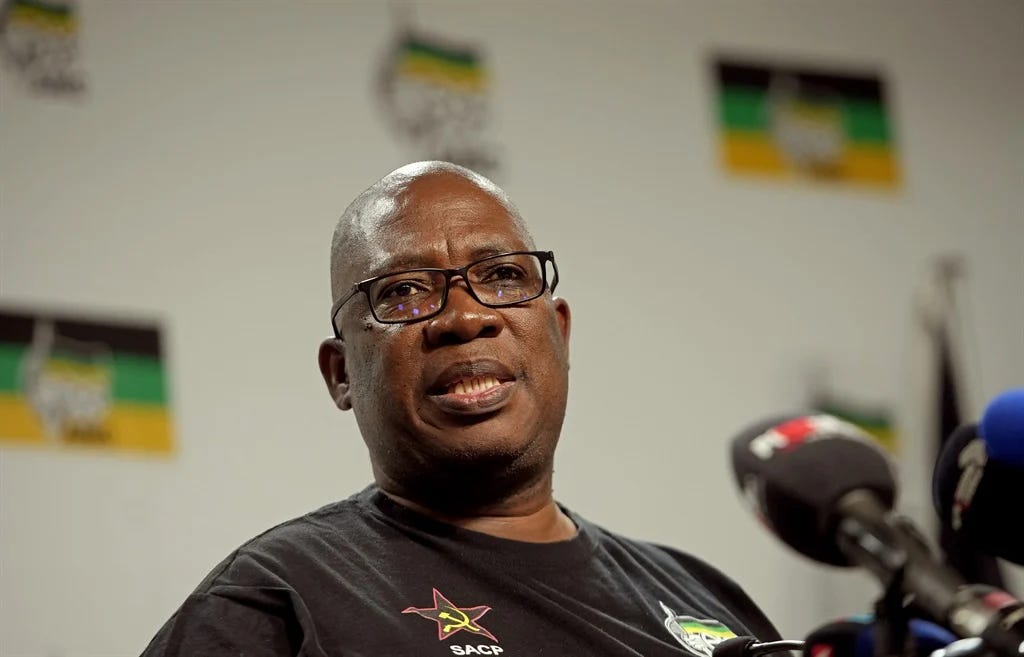
The announcement of the Gauteng Member of the Executive Council was the most anticipated event in the new era of South African politics. After extensive debate and negotiations, the Democratic Alliance (DA) and the African National Congress (ANC) were unable to reach an agreement to form a Provincial Government of Unity (PGU), resulting in a government formed without the DA. But who is to blame for this failure?
After the election of Panyaza Lesufi as the Premier of Gauteng, without contest from any other parties, it was assumed that the DA and the ANC had already drafted agreements about how they aimed to govern in Gauteng. This was in the midst of the Government of National Unity not having been formed.
However, as information emerged about the negotiations between the DA and the ANC concerning the appointment of the Cabinet at the national level, Premier Lesufi's intended cabinet announcement was delayed, not once but twice. With Monday's announcement also being delayed, it became clear that the DA and the ANC were getting no closer to reaching an agreement.
This situation once again highlighted the contention between the DA and the ANC. Many supporters backed Premier Lesufi's unwillingness to concede to the DA, whereas Lesufi faced significant criticism and accusations of ANC arrogance. Even after the formation of the GNU and the appointment of the Cabinet, the DA and the ANC were no closer to a resolution than they had been before.
On Tuesday evening, the DA held a press conference. The DA announced its unwillingness to accept an agreement disproportionate to the vote, the electorate's interest, and the principle of the GNU. The DA argued that because they held 28% of the electorate and the ANC held 34%, there was a need for proportional representation and, to some extent, an equal power share. "This division falls far short of the requirements set out in Clause 16 of the Declaration of Intent, and we said sorry, eight to three, is not acceptable given that the DA comprises 45% and the ANC 55% of the GPU. It also excluded the IFP that has been part of the national agreement from the start. We stated that this intention did not meet the requirement of good faith to the original signatories of the GNU," said Zille. This was after the ANC had proposed to the DA three MEC positions out of 11, including the Premier.
Following a deadlock between the ANC and the DA, Premier Lesufi was given the green light by ANC Secretary General Fikile Mbalula to announce a cabinet without the DA. A cabinet was announced, including Rise Mzansi, IFP, PA, and ANC, with the ANC holding eight positions, including the Premier, and the three other parties occupying the remaining positions. It was clear that the DA and ANC's willingness to work together depended on their power positions and perceptions.
On Thursday evening, Premier Lesufi held a press conference and explained the reason for the deadlock between the DA and the ANC. He stated that the DA had proposed an MEC split 7-3 in favor of the DA, with the DA holding three positions and the ANC holding the remaining seven. This was agreed upon before June 14, prior to Lesufi's election as Premier. After his appointment, the DA retracted the agreement and wanted to renegotiate with the ANC. During this renegotiation, the ANC decided to include more political parties in the government.
With the inability to see eye to eye, the ANC opted for a minority government and decided to govern without the DA, as they were initially unwilling to include other political parties in the PGU and were unwilling to uphold their own agreement.
The fear arising from this situation is that the DA and the ANC continue to be at loggerheads. With limited success at the national level and rumors of GNU negotiations being at risk due to the ANC and the DA struggling to reach an agreement and President Ramaphosa retracting the initial agreement, both parties run the risk of growing distrust between them. More importantly, constant disagreement, press releases, and leaking information to the media continue to harm the public's buy-in to the GNU.
Determining who is to blame in Gauteng is challenging. While the DA has legitimate claims for a proportional government, they justified their call for the seats they did. However, due to their proposed agreement with the ANC prior to June 14, they enabled the ANC to renegotiate a more inclusive deal. It is too simplistic to attribute the failure solely to the DA overexerting its power and influence or the ANC and Premier Lesufi's arrogance. The political setback both parties faced after the formation of the Cabinet and the negotiation of Cabinet positions played a significant role.
As we continue to engage with these new government compositions, it is crucial to find means of holding political parties accountable and ensuring transparency in the negotiation process. This allows the public to decide who to assign blame to, rather than creating narratives through media and social media.