

How do we evaluate the work of a minister? This question has become increasingly prevalent as new ministers complete their first month in office and continue to strategize for the future of South Africa and its people.
Over the past few weeks, various ministers have taken to social media, specifically X (formerly Twitter), to communicate their stances on political issues. Historically, the African National Congress (ANC) has been criticized for this approach and moved away from it in the lead-up to elections and the formation of the Government of National Unity (GNU).
The urgency to capture the attention of the South African public through social media has intensified, especially as smaller political parties seek to affirm their voice within the GNU and the broader governmental structure.
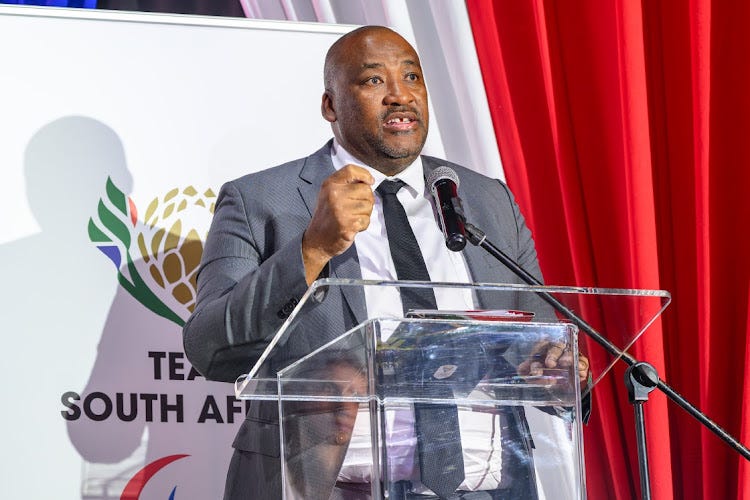
Recently, the Minister of Sports, Arts, and Culture shared comments about Miss SA. Upon his appointment, he committed to making “spinning” a sport in South Africa, alongside promises for increased funding for artists and athletes. This was used to justify the termination of the Superfans program.
However, silver medalist Jo-Anne van Dyk described her journey to the Olympics as “so very difficult” due to the need for self-funding. Minister McKenzie promptly responded on X, stating, “This nonsense will not happen under my watch. I want to profusely apologize to all athletes who experienced the same.” Yet, his failure to protect current athletes indicates a lack of accountability. His ability to swiftly end programs suggests he had the capacity to support the most vulnerable athletes. Without her parents’ financial backing, van Dyk would have struggled to pursue her Olympic dreams.
In a similar vein, early in his tenure, Minister McKenzie published a list of individuals who had benefited from COVID relief for artists. For some, this exposed them non-consensually, compromising their privacy and dignity. It was unclear which funds were legitimate, leading to reputational harm for many artists. Sizwe Dhlomo stated, “Being awarded a tender is different from being exposed for needing financial assistance. Where’s the dignity in this?” His comments highlighted the disconnect between the minister's actions and the individuals he intended to support.
Initially, it appeared many of the minister's actions aimed to provoke reactions from the public rather than propose viable solutions for the industry. A minister has the responsibility to advance policies and create the infrastructure that enables individuals to maximize their talents and cultivate sustainable careers.
Nonetheless, the Minister’s commitment to addressing these issues is commendable. As he navigates the early stages of his tenure, growing calls for his resignation due to his comments on Miss SA suggest that his time may be limited. Therefore, it is crucial that these commitments are accompanied by strategies and plans for industry growth.
It is all too easy for us, as a country, to reach for the low-hanging fruit and overlook legitimate accountability as politicians make sweeping promises to maintain relevance. The real work occurs when policies are drafted, debated, and engaged with by the affected communities. Instead of relying on comments and promises on social media that lack traction and fail to alter circumstances, we must ensure pressure is applied to the GNU and its ministers. We should demand milestones and timelines to hold them accountable. Without a commitment to action, we risk perpetuating political squabbles on X.