

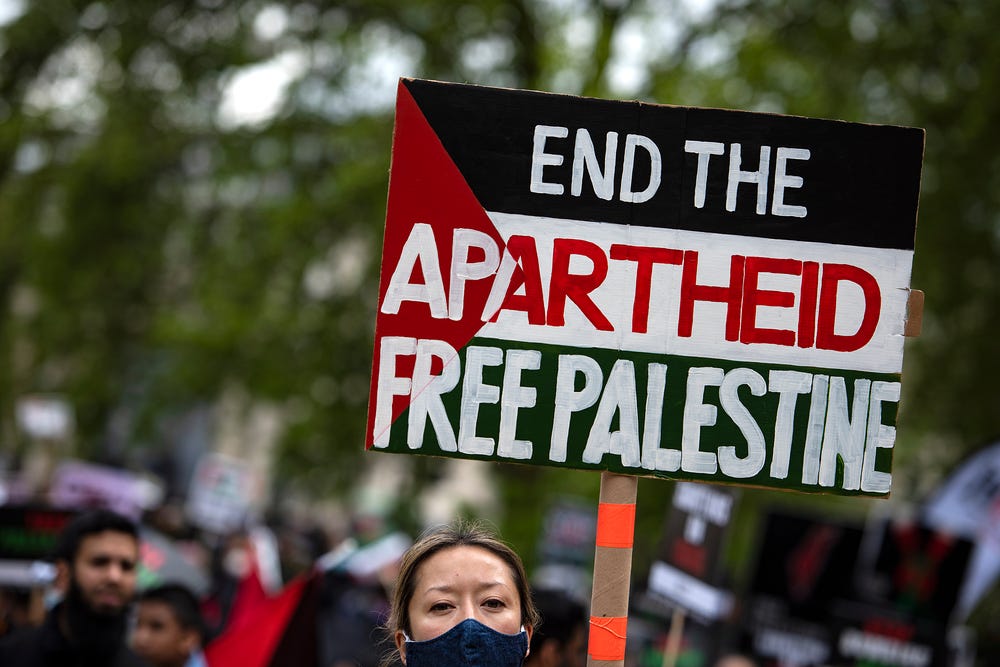
The winners of one Apartheid are the beneficiaries of another, so that we say the liberator of one Apartheid ought to be allies to the victims of another. The sanctioning of South Africa continues to show how little the current administration and America as a whole care about and value human rights.
South Africa continues to be at the forefront of human rights around the world, being the first country to legalize same-sex marriages in November 2006. The Freedom Charter continues to be a guiding document in former ruling parties' approach to socio-economic problems, having celebrated its 70th year of existence. South Africans have known a world where equality, freedom, and justice ought to be principles that we have enshrined.
When an outcry from a radical minority in Afriforum lobbies against the government, it fails to care for the millions in need of aid for HIV/AIDS. In order to protect their private property and land, they fail to recognize the past and how much that will impede our future. Suddenly, there is no win for anyone—the bill that advocated for exportation remains unchanged and unaltered. Vulnerable people are left without aid, yet Afriforum is still to blame.
In 2024, when South Africa took Israel to the ICJ over the genocide and Apartheid taking place in Gaza, America continued to be an ally but refused to punish Israel after a guilty ruling was given regarding its actions. Now, under the new administration, Afriforum has suddenly given Trump a smoking gun to take harsh action against South Africa.
In the executive order, it does not only mention land grabs—which are not happening on a mass scale—in isolation, but it highlights the case that put South Africa up against its allies. Washington has also complained about the case brought by South Africa at the International Court of Justice, where it accused Israel of genocide over its military assault on Gaza, which has killed tens of thousands and caused a humanitarian crisis, according to Reuters.
"This is the real reason why the USA is pursuing any form of cutting aid and is harming diplomatic relations with South Africa—not the baseless misinformation of confiscation of land and the ill-treatment of Afrikaners. South Africa is being punished for supporting the Palestinian people and condemning Israel for its genocide," stated EFF spokesperson Sinawo Thambo.
Suddenly, standing for human rights has become a crime against humanity. The advocacy that asks for the liberation of the Palestinian people, recognizing their sovereignty and right to self-determination, is now sanctionable. It remains reminiscent of how late America was in imposing sanctions on South Africa during Apartheid. UN United Nations Security Council Resolution 418, adopted unanimously on November 4, 1977, imposed a mandatory arms embargo against South Africa. Yet, it took another nine years for full sanctions to be imposed in 1986.
We must remember that these sanctions were unwelcome by former President Ronald Reagan. Reagan vetoed the Comprehensive Anti-Apartheid Act of 1986, but the U.S. Congress overrode his decision with a two-thirds majority, passing the act to impose sanctions on South Africa. The U.K. also imposed limited sanctions despite Thatcher’s objections, according to History. The reluctance to support human rights, especially in Africa and the Middle East, has remained true to American politics.
Now, as we watch around the world, America refuses to account for the massive human rights abuses in Palestine at the hands of the Israeli government. I say we fight. We advocate for proper action and support every cause that calls for dignity, humanity, and peace for all. More importantly, we fight for a free Palestine.
"If I don't like you, I trot out human rights violations that you may have, but when it is Guantanamo Bay," the late Dumisani Kumalo said, "They keep quiet, and you know when it is Gaza, they keep quiet." He says the US and others willfully mischaracterized South Africa's policies. "We didn't do things the way the British and the Americans wanted us to do them, and if you don't do it like the big ones—the French and the Americans and the British—the way they want to do them, then you are a cheeky African. Well, I am happy being a cheeky African," Kumalo asserted.
To that, I continue to be happy to stand for the causes that prioritize liberation, equality, and social justice. More importantly, I too will be a cheeky African.