

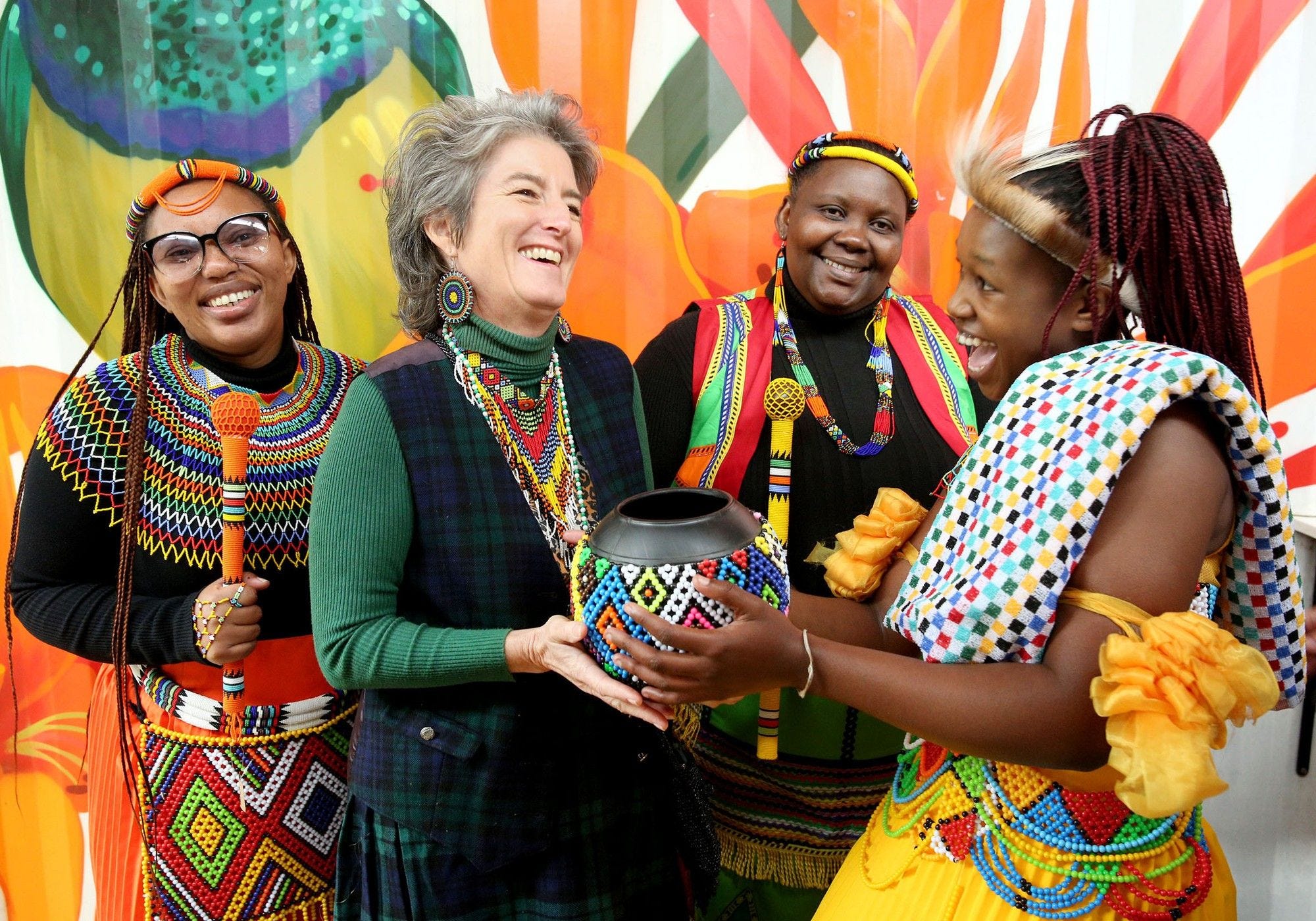
The celebration of Heritage Day in South Africa reminds every single one of us that the South African story is one that is rooted in diversity, understanding, and complex history. A reminder that South Africa is not of one, but many different cultures that make up our collective story.
Over the years, there has been a disunity that has begun to bubble — one where politics, identity, and ideology became a core reason families, friends, and communities broke down. A world, sought to consume its own hate, began to forget the calls for love that once liberated much of the world only a few decades ago.
More specifically in South Africa, the illusion of the Rainbow Nation — that called for everyone to be one, united by a single rainbow — became the calling card for South Africa as the wave of liberation echoed around the world.
Over three decades removed, it is apparent that vision — the illusion that South Africans were all one — has faded into the relics of the past. A moment in history many young South Africans have been unable to realise and aspire towards in their current future.
Forcing ourselves, as a whole country now, to reckon with what it means to be South African — we cannot allow that to be absent of differences. It cannot be a country where language is assumed to have more importance or value than others. It cannot be a country where children, regardless of race, are unable to communicate in the multitude of dialects that bear fruit to the identities of millions of South Africans. And it cannot be a country where the desire to learn and understand is lost — because it is then our diversity becomes a platform that can be used against us, rather than used for us.
Around the world, there has been an emphasis on how easy it is to hate those who are different — outside of us, and those who we know little to nothing about. However, this does not have to be the case for South Africa.
In rebranding the identity and the machinery of the past of Apartheid, it did not mean that the mission — our collective responsibility to participate, to be good-willed humans in South Africa — was forgone at the onset of liberation, but rather entrenched to ensure that a system of the past could not occur today.
It truly means being willing to step outside of your community, learning who your neighbours are, and who are truly the most vulnerable — to shape and frame what is necessary for South Africa. It meant understanding why some cultures addressed particular events in certain ways, to build a South Africa that belonged to all who lived in it, rather than proclaiming it on a piece of paper.
It means being willing to learn and understand the country that is South Africa — for all its beauty and pain. For both those who have family lineage that is deeply entrenched in the land, and those who came to become a part of this history through violent and oppressive means.
Accepting the past does not invalidate the present — it provides context and perspective to how systems contribute to the inability for certain communities to access jobs, health care, and education. This is not privilege owed to a few, but responsibility placed upon all.
As we celebrate Heritage Day, maybe it’s about time we challenge the oversimplification of our own history. We point to history and understand it together — not to disagree about the past or to remind everyone of suffering that seems too far removed — but to remember where we came from, and where we can no longer return.
Let it be us — this generation — who truly unpack our falsely created sense of unity that spoke of one, simply because we inhabited the same land. Let us truly start to learn and unpack those who are similar and those who are different to us — because no two stories are the same. Let us learn truly what each culture dreams for South Africa.
In this learning, in our moment of listening, let everyone remember that South Africa is big enough for everyone — for every culture, race, gender, and identity. Though it may not be perfect now, it can be better tomorrow.
So let’s take this Heritage Day to be different — to ask our neighbours what they dream to see in this beautiful country. And absent the Rainbow Nation, what do they see for their country and the millions of people who aim to live out their dreams?
Happy Heritage Day.