

I recently read Yuval Noah’s book Nexus and constantly had this quote playing in my head well after putting the book down:
“Democracies die not only when people are not free to talk but also when people are not willing or able to listen.”
— Yuval Noah Harari, Nexus: A Brief History of Information Networks from the Stone Age to AI
It made me ask: have we, as a society, lost our ability to listen? Have we completely forgotten how to hear another person’s perspective without the need to challenge, denounce, or discredit the individual? To hear both their thoughts and their heart. To listen holistically. And does that simultaneously mean we have forgotten how to talk about the past, present, and future?
Around the world, there seems to be this major question: How did we get here? In almost an instant, it felt as though the world was flipped on its head. Invasion and war were sparked in Russia and started a prolonged conflict between Russia and Ukraine. Furthermore, the genocide and destruction of Gaza after the horrific attacks of October 7th.
Accompanied by the further dismantling of the normal way of doing things. Trump stepped into the Presidency of the United States and overnight redefined how both local and international politics are played — strongly emphasizing tariffs, breaking down the rules of global diplomacy, and challenging a stagnant world order. The world was forced to play politics anew, and South Africa found itself right in the middle of the world’s “new” politics.
With an executive order declaring the pause to all aid over the Expropriation Act and the ICJ case against Israel on the current violation of war crimes and international law, Trump further enhanced pressure on South Africa, who seemed to be a strong opposition to their strong ally, Israel, in the Middle East.
Furthermore, South Africa is facing its own internal struggles with the birth of a new coalition government. The Government of National Unity — much promise, yet little outcome. Pressure mounted on the government as budget votes failed to pass, and the ANC and DA seemed not to be maturing in political collaboration with one another.
Additionally, intense public squabbles over policy decisions such as the NHI, the Expropriation Act, and the BELA Bill meant public trust in this newly formed government quickly began to dwindle. The ANC and the DA could seem no further opposed to one another — even as they occupied the government together.
Then unexpectedly, in a year already filled with political drama, General Lieutenant Mkhwanazi provided explosive allegations that tied the Police Minister — who is on special leave — Senzo Mchunu to organized crime syndicates in South Africa. This further added to the raid of political chaos in the country, which gave way to the Madlanga Commission of Enquiry.
Already making headlines as leaked WhatsApp messages surfaced, accompanied by the death of the ambassador to France, Nathi Mthethwa, in Paris (also a former Police Commissioner), this has added conspiracy and discussion for South Africa to unpack. While Shadrack Kumalo recovered from the illness that led to his absence, and with the Ad Hoc proceedings in the background, South Africa is watching stories unfold — but to what end?
Even now, with the introduction of Helen Zille, it has not seemed as though the country has gotten any closer to actualising anything tangible. Headlines and campaigns dominate the media and the discussion — but many times, they are absent from the voices and thoughts of everyday, average South Africans.
It is becoming clearer every day, in the political spheres around the world, that understanding is being lost — and there is a desire to exclude rather than hear the other side out. This, oddly enough, is happening even between people who agree.
In a recent Ezra Klein interview with Ta-Nehisi Coates, they struggled to agree on whether or not history was important in both understanding and contextualising how and why the Democratic Party had gotten to where it is now — locked out of power and absent a clear way forward.
Ezra Klein argued the past was unimportant and that there ought to be a practical way to move forward — that there ought not be this sense of apathy, as this feels as though it is “the worst it has ever been.”
Strongly opposed to this, Coates highlighted that it has been worse for people of colour communities in the United States. He particularly pointed to how the ‘60s, at the time, were some of the most optimistic times for POC communities, particularly through civil rights and the leadership of Martin Luther King — who, even though he spread love, was still assassinated.
Klein, though not opposed to this belief, questioned whether there should be an attempt to draw a line between those who are deemed acceptable and those who are not. Perhaps, he suggested, there has to be a willingness to engage with the other side.
Coates remained strongly opposed to this, particularly pointing out that this history has not always been positive. Thus, there is a degree of protection and exclusion necessary — especially from people who are bigoted, prejudiced, and racist.
Somehow, at the end of the interaction, I walked away confused — blinded to the fact that both of them politically believed in the same thing. They were unable to cross the aisle and recognise that in some areas, they have some agreement and in others, not — and that’s okay.
Much of the discussion is lost in both sides trying to enforce their belief on the other. There is an inability to concede and recognise that actually, there may be some validity in both truths — as they exist as a result of their different experiences.
Klein, a Jewish man, discussed his experience of the events that took place on October 7th, while Coates expressed his experience — both reading about the ‘60s and experiencing the events of Black Lives Matter and the death of George Floyd. And in both of them, I recognised both pain and suffering, as they viewed an attack on their own communities.
There was no need to compare them to show which one was more important than the other — but to recognise and to hear that someone else experienced something that hurt them to some degree, and that they need a degree of comfort and security, no matter how much you disagree.
Somehow, society has deeply engrained this idea: that a person’s idea is not always true and not always the case. People can have ideas, and they can be wrong — some may even be hurtful — but how you go about fixing the act is important.
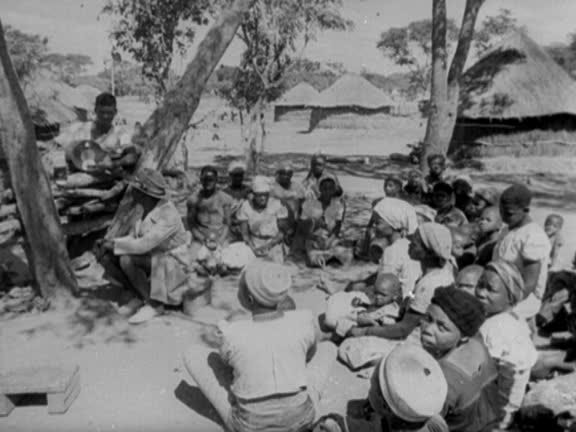
South Africa’s story does become one of liberation only if Mandela and so many other ANC leaders actively decide to sit and speak to the people that actively oppressed them. The ones responsible for the death of thousands of their comrades. A government with the blood of children on its hands still found a way to change the course of the country — from potential civil war to democracy.
Not because they forgot their differences or left parts of who they were behind — but because they found ways to create a society of understanding. One where people could openly participate and talk about their pain, their story, and their identity in this newly formed nation.
Accompanied by the feeling that people were listening, watching, and taking in both the past and understanding the value of the present. The story of South Africa was birthed from an imperfect system — the Truth and Reconciliation Commission — that taught the nation it is both important to talk and to listen.
However, looking at where we are now, it feels as though that seems nothing more than the hopes of the past. Absent the actual feeling of positive change, with growing inequality and bubbling unemployment, the country has lost its ability to listen. Now, it actively cries to be heard — or decides to disconnect from the echo chamber of politics.
Now, the feeling of hopelessness lingers throughout the streets of South Africa. With the country asking: who will be the next messiah? What will be South Africa’s way out of an extremely tricky situation? Who will we all collectively listen to, to define the way forward for South Africa?
Absent that, our ability to listen falls further away — as narratives tell us to exclude those who are different from us in race, ethnicity, religion, gender, sex, and political orientation. As politicians tap into the reserves of our hidden suffering, we become a nation broken — unable to declare truly who is at fault for the past, what we are to make of our present, and where our future lies.
Begging a very simple question:
Who are we not listening to when our own democracy is dying?