

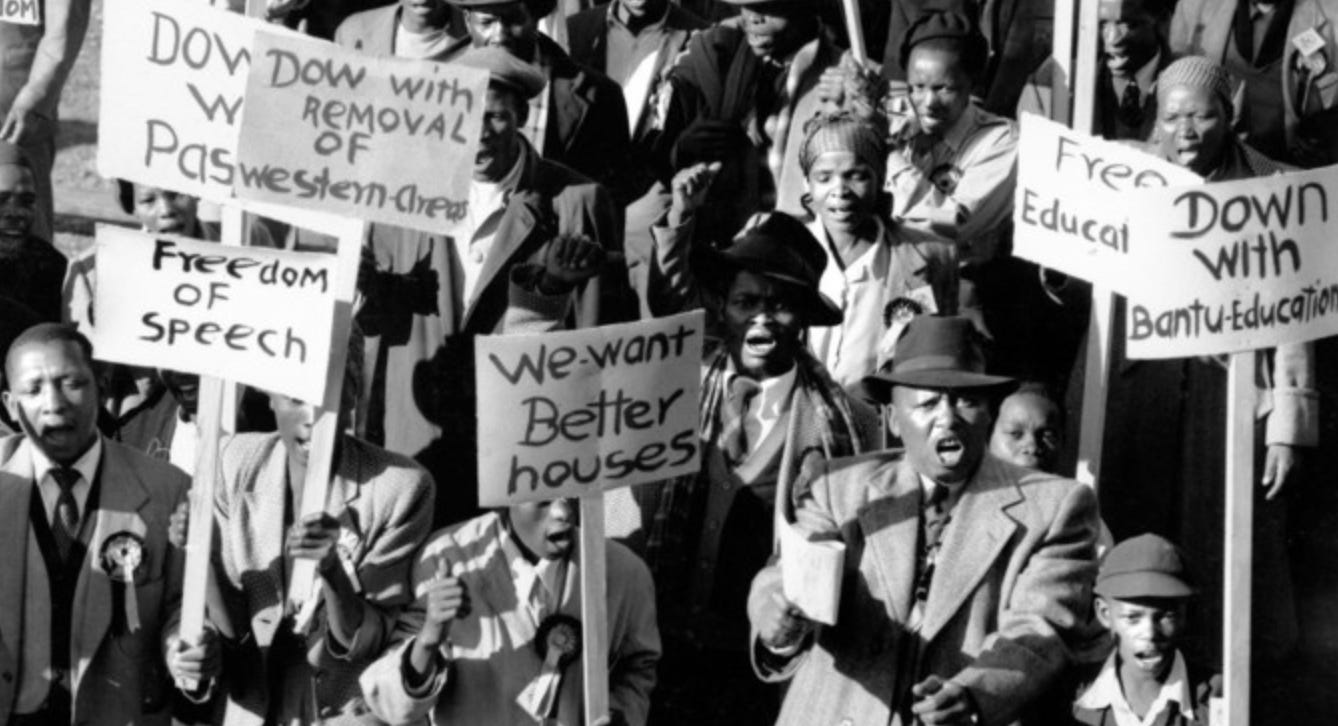
21st March marks Human Rights Day in South Africa. Men gave their lives unwillingly as they protested against the use of passbooks, which restricted the movement of black individuals, marking 64 years since 1960. It is the only right I use to advocate for the restoration of global peace and the granting of human rights to all born on this earth.
Everywhere you turn, there seems to be no peace. Whether it be the conflict between Russia and Ukraine or Palestine and Israel, war in Sudan and conflict in Haiti and coups in Niger, there seems to be a growing feeling of anarchy. People are losing faith in their governments, the standard of living is increasing, and the inequality gap continues to grow. The growing pressure of climate change and its impacts start to affect countries and their people. It would only be obvious to look out for oneself. We have begun to look to people who agree with our beliefs and ideologies; we moved away from people who don’t appear similar to us, and we refuse to have people different from us exist in our country and our land. Only a few sentiments shared over the last few years. There is a growing feeling that our lives are at threat. Unclear of what that threat may be but very clear it is there and it is growing. We continue to rely more on instinct and less on logic, and we lose sight of our humanity.
Over the past two years, we have seen the absolute disregard for the rights of humans and their right to sovereign land, both in Ukraine and in Palestine. However, instead of calling for peace and an end to war, we began to engage in the semantics of the war. Unpacking the history of the conflict, the history of the land, and any other information which was able to justify the stance that we had taken. But we forgot the severity of these conflicts and the humanity which continues to be lost on a daily basis. It seems we seem to hold on to what we think is right instead of what we know is right. Do not mistake this for a disregard for the complex history that surrounds these conflicts but rather a need for us to respond to the current climate that has people dying as a result of war.
Furthermore, there is a need for us to shed light on the developing world and the countries that also continue to suffer from their oppressive past. Countries like the Congo, Sudan, and Haiti continue to face major political, economic, and humanitarian crises that force people to be displaced and move to countries which are not particularly welcoming of them. Moreover, for many who are unable to move, they continue to suffer in silence as they are not given the same spotlight as many of the northern hemisphere conflicts. It is important that we advocate for all who are faced with illegitimate governments and oppressive regimes which devalue human rights and value control and power significantly more.
It is important that we do not get desensitized to the violence and abuse that people have to go through and continue to go through as a result of war. In the 1960s through to the mid-70s, the antiwar movement recognized the wrongdoing of the various states involved, and they called for the end of conflict. Independent of their view on the conflict or their relation to it, they were able to recognize that war took away from our humanity regardless of where we were in the world. Now, even though it appears to be harder than ever to sit across from someone who is completely opposed to you and your beliefs, we have to try and find that little bit of humanity that is left in us and come together to find solutions to these conflicts that strip us of our humanity.
In 2022 at a conference in Kazakhstan to unite in promoting peace, Pope Francis challenged leaders and asked, “May we never justify violence” as religion can’t be used to justify the inhumanness of war. Similarly, at the conference, the chairman of the senate of Kazakhstan stated, “We have a common goal but we are no longer looking at our differences but we are recognizing our common concern, for those who struggle or suffer.” He was able to recognize the need to be united independent of our beliefs to ensure no suffering can occur to any of our people, those being everyone born on this earth. It is hard to let go of your preconceptions and biases but it should not be hard to recognize that a life is better when it is lived and fulfilled with all the basic necessities every human requires to live. Yes, this sounds like a utopia but we can edge forward day by day as more and more people recognize the importance of a peaceful world.
So on the 21st of March, I ask you to call for peace for all. To find in your heart to care for those who haven’t been cared for. To love those who haven’t been loved. To come together to hold hands under one banner where we celebrate our humanity. We celebrate the ability to overcome all the struggles faced by our ancestry. To recognize we have only survived this long because of shared community and humanity. We continue to live if we protect that with all our hearts and might.
March 21st, 1960, is considered a cornerstone in my family's history. Sharpeville sparked and evoked my grandfather to pursue a political career to fight for the liberation of South Africa. It was that day people thought peaceful resistance would not work. It was that day that for many the revolution began to take place. As they say, the rest was history.
This Human Rights Day reflects on how you can empower someone else's journey. Help them get a step closer to accessing the same rights you have. Remember to call for the protection of our humanity and our peace.