

Reading and watching reviews of the State of Nation Address what became oddly apparent was that the media is truly unclear as to what story it wants to tell. What exactly does it actually intend to hold the government accountable for and being the bridge to the public that separates nuance and rhetoric from policy, statistics and data, the people who find the real story. To put it truthfully it has become disillusioning and it is showing itself now more than ever.
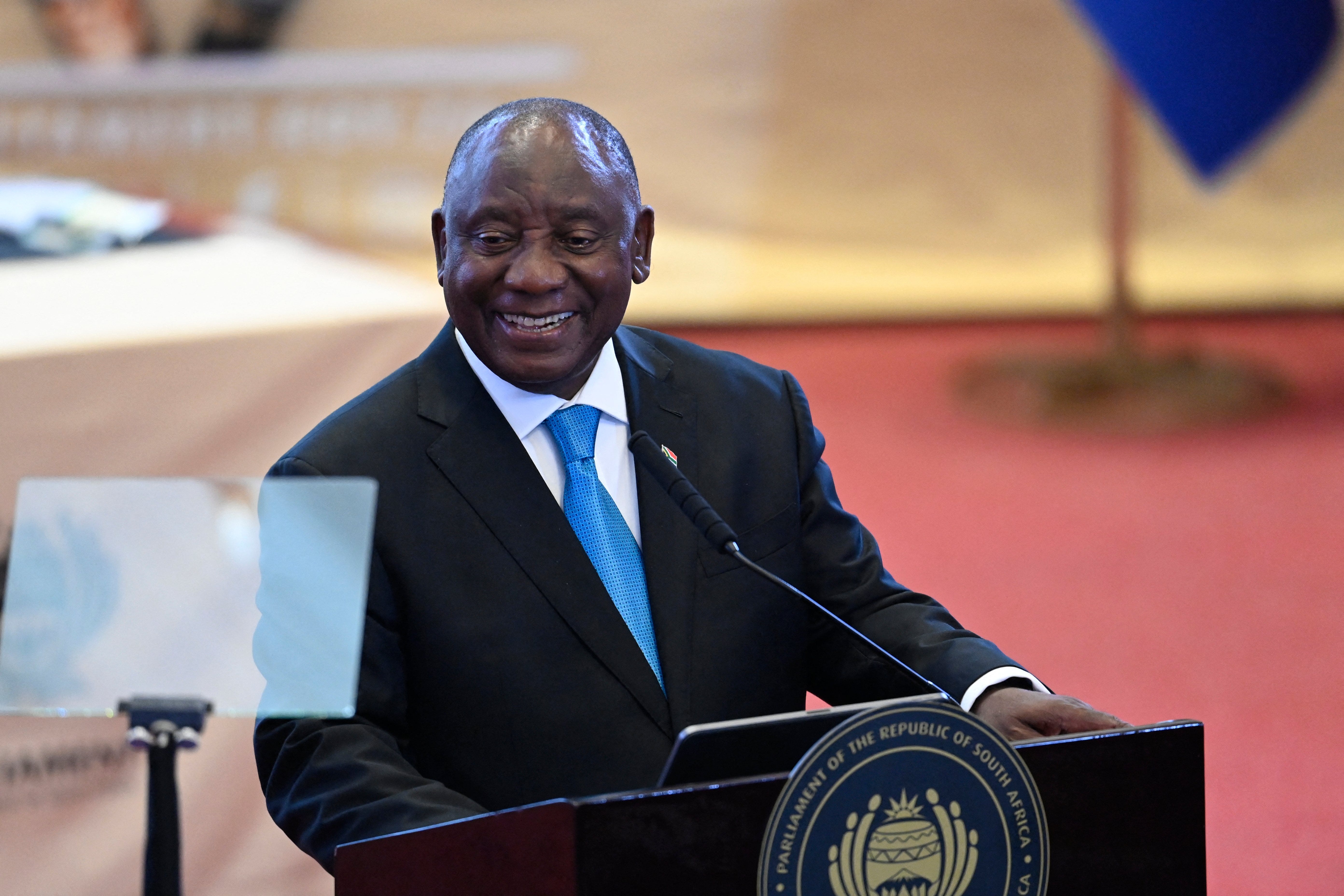
President Ramaphosa was the key character as he took to address the nation. He addressed a multitude of issues from the water crisis facing Joburg, crime and corruption being discussed and unpacked through the Madlanga Commission, failing municipalities and there need to be alternatives and state intervention and the improvements in the economy.
He spent over 100 minutes addressing the people of South Africa and took his time to both outline where the country has come from, how it is now a turning point and seems to be improving but there are major issues but particularly crime that is a major issue to confidence in the state and a threat to democracy.
Without expressing too much in regards to the speech just yet, one thing is true about problems that face society. There is never a solution that fixes everything and rarely are there instances in which there is complete agreement. Democracies inherently come with the ability to express dissent and push for discourse that may or may not influence policy. However, this influence element seems lost on the media in South Africa.
What is becoming particularly hard to understand are the assertions by individuals who are part of traditional media organizations without any clear justification. Analysts are exclaiming President Ramaphosa will be out at the end of this year. To some degree there may be validation with a local government election, however it is outlined it never happened before an ANC election because it puts the party in turmoil. Statements are made to direct and guide the narrative in a certain way but lack clear timelines, trends or evidence.
Furthermore, the echo chamber of information in media and the lack of diversity in takes where journalists actually express a viewpoint that is informed by evidence rather than opinion there would be wider representation of the takes of South Africa.
Currently, there is both an overtly critical outlook on the President as he fails to implement and meanders over issues. Forms tasks, groups and forces that are non consequential or end up failing in their objective. Many pointed it out with the Water committee chaired by Deputy President Mashatile announced two years ago. Providing much credibility to the open questioning of the president’s abilities.
Conversely, considering the pursuit the President has undertaken being taken over the grey list, consumer spending being up in the months of December, inflation being low. While simultaneously being an active voice and player in geopolitical engagements. There have been many crises and problems that have been resolved slowly over time.
Eskom and Prasa both provide prime examples of President Ramaphosa’s long-term approach and meticulous planning to solve issues in South Africa. Suddenly Loadshedding is not the crisis that it once used to be. Moreover, Prasa trains increase accessibility to cities and affordable transport provided by the government. It is far from perfect but is a success story.
However, it cannot be devoid of the unemployment rate and youth unemployment. Many journalists have pointed out that until it is felt in communities and seen amongst those in civil society this speech is nothing but another promise. There is truth to that, it is another promise. But not all failure is complete failure, sometimes things take just a little more time.
The government will never and is unable to get everything right entirely all the time. Governments are a human based system, humans are innately imperfect and will forever create imperfect within a system. Think about input on the system and typing a name or number incorrectly that is human error. That happens at scale for the government and means that the targets they set they may over estimate and under estimate, that is a part of their function to estimate how much they can spend in a budget.
In instances where collection is better than expected at SARS as in this year there is more money that can be allocated to the budget. Governments are required to promise good outcomes, they are frank about their realities. But politicians frame the future, the outlook and the path forward.
There is credence in the media questioning the validity based on outlines but forever playing to the gallery and enforcing that it never works makes it untrue. The South Africa government works, it is not the best. It has been horrible at solving inequality and taking care of socially vulnerable communities. But it has not collapsed and it is far from it. It may show signs of cracks but it is about how the collective guides conversations to solve them rather than point them out.
It felt as if much of the question was about negativity. The things that were going wrong. But no one ever asked how the country would improve and maximize on the things that it is doing right. Everyone provided their opinion on how they would solve the problems in South Africa but beyond word had no action.
These are not public citizens watching a speech. These are members of parliaments and ministers who actually have the ability to, beyond being part of the conversation, actually implement policies that lead to the vision they hope to see for the country. Not critics about speeches and more talks.
There is a need to break the echo chamber of the media that simply provides verbatim the words of politicians. But the media that asks questions that unpacks and truly understands the motives and decisions made by politicians, donors and the country as whole.
It will become an even harder task as the newsroom shrinks and media interests are funded by a select few. But there is a need for South Africans to express their full voice and truly ask those who criticise their colleagues in power, what are they truly doing about?
South Africa needs to get a grip and the media needs to become an institution that complains but that shapes, builds and guides political and intellectual thinking in the country. That means being critical about the question asked, the statements made and the assumptions presented.
It means accurately separating what is the difference between opinion and fact. Clearly outlining what is a thought versus what is known. It means making sure that it is a place of trust that builds understanding and does not further disrupt and confuse discourse in the country.
If there is truly an attempt to hold this government accountable, let it be the media that tracks, updates and communicates the information promised to the people. Let them understand how they are being failed or not because the government is or is not fulfilling its mandate. Do not outline the thought before the information, inform rather than persuade.
Truly none of us know what will happen after this SONA, it seems as though the President has asserted some hard power with military support to the police. The establishment of an independent anti-corruption body and move to garner more private-public partnerships through operation vulindela. There is a lot to be seen and only time will provide that clarity.
So let the future discourse in South Africa be about pragmatism, practicality and accountability that does not only point the figure to the top but asks all of us what is our role to play? Let the media be the bridge to information, not just opinions devoid of facts.