

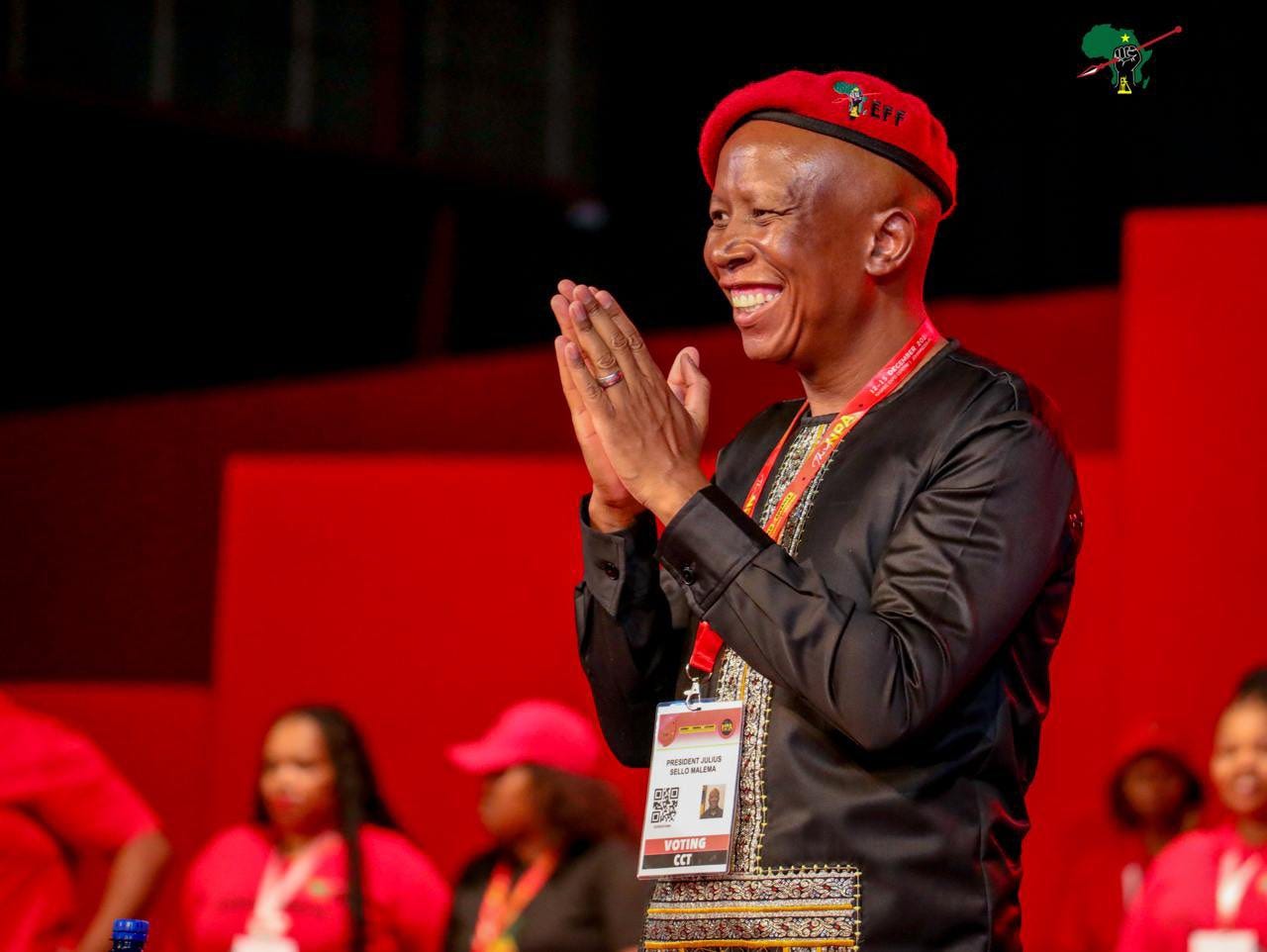
Does Julius Malema represent the rise of radical leftism in South Africa, and does he define a world of single-party leadership? Is there something to be learned from the rise of populism that dominates the Northern Hemisphere, and is it perhaps similar in Southern and social democratic countries?
Julius Malema’s party, the EFF, has undergone a tactical shift—galvanized internally by the creation of the uMkhonto weSizwe Party (MKP) and marked by the seemingly forced removal of former EFF MP Buyisani Ndlozi. This shift has further centralized power around the "Commander in Chief."
Similarly to how the Republican Party was dominated and, to some degree, taken over by Donald Trump, Malema has managed to do the same within his political sphere. However, considering that both South Africa and the EFF are democratically young in the broader context of South African history, the EFF represents a significant portion of many people's political ideologies.
Whether the unexpected growth of the EFF is viewed as a shift away from the ANC or a reconsideration by its members, it still represents leftist leadership ideals. With the MKP struggling to sustain party leadership and potentially failing in its succession plan, the EFF will likely become the primary home for leftist politics.
The EFF, in many ways, is the only established political party with the credentials to contest power against the ANC. And if Julius Malema—if this must be emphasized—emerges victorious in this political battle, one that has harmed him in many ways, he will represent the people's voice.
Amid South Africa's deterioration, the EFF has followed a similar parallel trajectory. Suddenly, it can speak directly to the people—but more importantly, to the youth—creating a new politically active class. The EFF has, in many ways, become a hub for radical political ideology in South Africa, continuously cultivating young minds.
Although the EFF continues to lose in the polls, it is, in some ways, winning all the other battles. It remains the last legitimate political opposition, with an established base and the capacity to mobilize against a newly co-joined DA and ANC opposition.
Dominating social discourse online during the election, remaining core in the media, and staying relevant even after significant setbacks—these factors contribute to the EFF’s continued influence. It almost seems as though the GNU, in its fight against the EFF, and the MKP, have struggled to maintain their relevance.
With a youth population increasingly losing morale and faith in democracy, Julius Malema finds himself at the center of a revolution—not in a way that romanticizes violence, but as a reflection of the shifting political landscape.
Many will attest to student campuses being filled with red t-shirts and EFF banners on campus day. Many were shocked at the election result. Of course, this varies by area and location, and there is no way to affirm a ballot. Nevertheless, it still represents a new wave of politics and an undertone that is not always accurately represented within the media.
Around the world, we have seen populism evolve from ideological rhetoric to radical action, as seen on January 6th, 2021, in the United States. The same rhetoric that claims we must "fight and reclaim" what has been lost—not only by white people but by all system beneficiaries—creates a think tank and forum for radicalization.
The question remains: if leftist parties were to unite once again under the leadership of Julius Malema, who has reinforced his hold on his party, will there one day be a call for an actual fight and a genuine call for justice in the streets? Will there be a rewriting of history?