

In the lead-up to South Africa’s 2024 General elections, TikTok was flooded with political memes, Instagram stories carried threads about destruction in Gaza, and Whatsapp group chats buzzed with voice notes about which party was the least bad option. When election day came, over 11,5 million eligible voters didn’t show up – and many of them aged between 18 and 35 years old.
To many observers, this confirmed what has become a familiar complaint: young people in South Africa are apolitical. They don’t care. They are disengaged. But speak to them, really speak to them, and you will quickly see that is not the case. The truth is far more complicated – and revealing of a generation that may be turning its back on the ballot box, but not on justice.
South Africa’s political history is one of deep struggle, mass resistance, and hard-won liberation. For decades, black South Africans were denied basic human rights under the apartheid regime. Youth-led movements – like the African National Congress Youth League (ANCYL) and the South African Students’ Organisation (SASO) – helped dismantle that brutal system. However, it’s been 31 years into democracy, and many feel the liberation promise remains unfulfilled. The streets still echo with inequality, unemployment, and corruption. Every year, on the 27th of April, we are reminded of what this day was meant to signify. As political analyst and lecturer Dr Mmabatho Mongae aptly puts it, “Democracy isn’t a once-off achievement. Democracy is an ongoing achievement.”
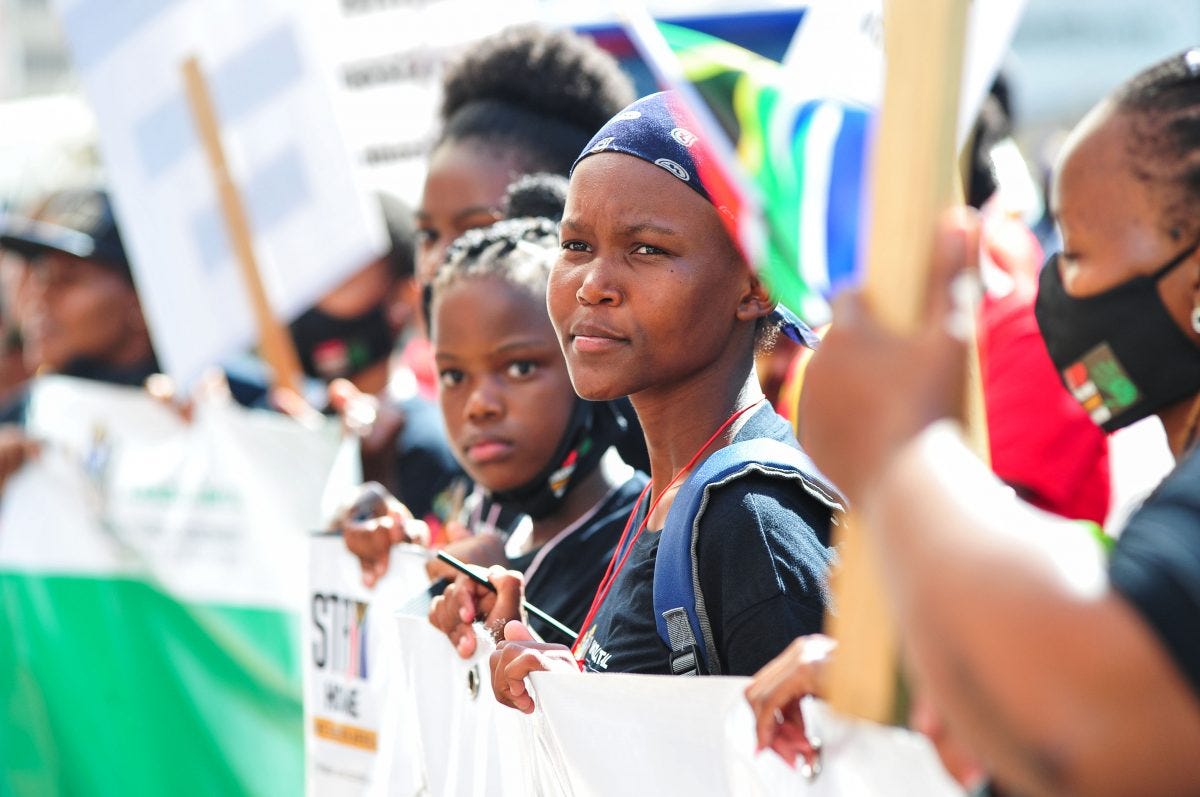
It’s not that young people don’t care about politics – we just no longer believe that traditional political structures are where change happens. We’ve grown up watching corruption scandals pile up while communities remain without clean water or safe housing. We’ve seen power used not to uplift, but to protect the powerful. So we resist in different ways. We resist through lifestyle choices, through cultural expression, and through digital protest. We boycott brands that fund genocide, we circulate community ad fundraisers, we mobalise behind movements like Fees Must Fall and Am I Next.
We’re making political choices – just not always the traditional ones, because politics doesn’t live in Parliament for us – it lives online, in the streets, in communities, and in the everyday decisions we make about how we show up in the world. Even those inside politics are voicing this shift. Fasiha Hassan, a former student leader and South Africa’s youngest politician, aged 30, called for urgent new leadership and fresh ideas, expressing that “the ANC must evolve or die,” warning that the born-free generation, who are unbound by ANC loyalty, are ready to act.
Part of the tension stems from how politics is communicated. Dense manifestos, long debates, and performative speeches feel disconnected from the lived realities of young people. We aren’t disengaged because we don’t care. We’re tuned out because politics isn’t speaking our language. However, it’s important to emphasise that silence has its repercussions. Every time young people abstain from politics in whichever form, others are deciding our future for us. The true danger isn’t just that we’re absent from political spaces – it’s that our futures are being shaped without us. And despite our digital activism, policy is still made in rooms we’re not in.
The challenge now is to reimagine participation – to bridge the gap. Not by demanding young people return to outdated forms of political participation, but by reimaging what participation can look like. We need metropolitan spaces that work like youth spaces: digital, honest, collaborative. That means supporting youth-led media, investing in civic education that is creative and culturally relevant, and treating young people not as a problem to be solved and contained, but as a political force to be reckoned with.
Young people aren’t apolitical. We’re politically awake in ways this country hasn’t learned to recognise yet. We’re not too young to care, we’re just too tired of being ignored.
